The 2026 Top Orthopaedics Device Systems for Global Buyers guide examines a market shaped by ageing populations, trauma care, and rising mobility expectations. The World Health Organization estimates that approximately 1.71 billion people live with musculoskeletal conditions worldwide. Low back pain remains the leading contributor to this burden. These figures create sustained demand for implants, surgical instruments, fixation systems, and digital planning technologies.
Market estimates differ. Grand View Research identifies continued growth in the global orthopedic devices sector, supported by joint reconstruction, spinal care, sports medicine, and hospital investment. Such forecasts are useful, but they should not replace product-level verification. Buyers need evidence from clinical evaluations, regulatory documents, sterilization records, and post-market surveillance. Experience shows that a polished catalogue cannot confirm long-term implant performance.
This overview considers suppliers through practical criteria. These include material traceability, manufacturing consistency, surgeon usability, training support, service coverage, and total ownership cost. ISO 13485 certification can indicate a structured quality-management process. However, certification alone does not prove clinical superiority. Regulatory pathways also vary across the United States, European Union, China, and other markets. Local approval is essential.
The search phrase “orthopaedics derives system” may appear in procurement research, although it is not a standard regulatory term. Buyers should clarify whether it means an implant platform, instrument set, or complete surgical workflow. Fit matters. Data matters. Small specification gaps can create delays in the operating room. This guide therefore combines published industry evidence with cautious comparison, while acknowledging that no global ranking can suit every hospital, surgeon, or patient population.
2026 Top Orthopaedics Device Systems for Global Buyers
The 2026 orthopaedic device systems market is expected to expand at approximately 6.5% CAGR, according to projections from Grand View Research and Fortune Business Insights. These estimates cover joint reconstruction, trauma fixation, spinal systems, sports medicine, surgical instruments, and image-guided technologies. Demand is rising as ageing populations increase the need for fracture care and mobility restoration.
Market scope is broad. It includes implants, reusable instruments, planning software, navigation tools, and sterilisation-compatible accessories. Buyers should examine more than unit prices. Hospital engineers often assess material traceability, instrument ergonomics, training requirements, service response, and compatibility with existing operating-room workflows. Small details matter. A poorly organised tray can delay a procedure.
Regional purchasing patterns remain uneven. High-income markets often prioritise navigation, data integration, and revision procedures. Emerging systems may focus on durable implants, simplified instrumentation, and predictable supply. The World Health Organization continues to identify musculoskeletal conditions as a major source of disability, supporting long-term clinical demand. However, forecasts are not promises. Currency pressure, reimbursement changes, regulatory reviews, and uneven hospital budgets may weaken the projected 6.5% growth rate. Some reports also use different market boundaries, making direct comparison imperfect. Global buyers should verify local registration, clinical evidence, lifecycle costs, and post-market support before approving a system.
These figures change how global buyers should assess orthopaedic device systems. A reliable system needs more than precise implants. It should support imaging, surgical planning, fixation, rehabilitation, and clear clinical documentation.
In a busy operating room, intuitive controls and stable instrument tracking can reduce avoidable delays.
Small details matter. A poorly balanced handpiece can increase fatigue during long procedures.
Procurement teams should review clinical evidence, sterilisation workflows, training requirements, and service support. ISO 13485-based quality systems can indicate disciplined manufacturing controls, but certification alone does not prove clinical value.
Buyers also need local regulatory compliance, transparent material information, and practical maintenance plans. Cost comparisons should include consumables, software updates, staff training, and downtime.
Some product claims appear stronger than the published evidence. Independent evaluations may be limited, especially in lower-resource settings. That gap deserves attention.
A useful device system should fit real hospitals, not only ideal demonstrations, while supporting safer and more consistent orthopaedic care.
Global buyers now assess orthopaedic systems as connected architectures, not isolated products. The World Health Organization estimates that 1.71 billion people live with musculoskeletal conditions worldwide. This demand increases pressure on hospitals to select scalable platforms. Grand View Research valued the global orthopaedic devices market at approximately USD 47 billion in 2023. Implants remain central, but their performance depends on instruments, planning software, and surgical workflow.
Implants should match anatomy, fixation demands, imaging quality, and revision planning. Instruments must provide consistent handling at the operating table. Small details matter, including tray weight, cleaning access, and color-coded components. Robotic systems can improve positioning accuracy, yet accuracy alone does not guarantee better outcomes. Software should connect imaging, planning, navigation, and postoperative records through secure, interoperable data structures. The architecture must also support manual surgery when technology fails. That backup is essential.
Recent market analyses from Fortune Business Insights and Mordor Intelligence show strong growth in surgical robotics and digital surgery segments. However, reported growth rates vary by definition, region, and hospital adoption. Buyers should inspect the methodology. They should request peer-reviewed evidence, validation records, cybersecurity controls, training requirements, and total ownership costs. A technically impressive system may still create delays if staff need lengthy retraining. One weakness remains. Many evaluations measure precision, not workflow burden or long-term revision outcomes. Procurement teams should compare both.
| System Layer | Representative System Elements | Primary Clinical Function | Common Materials, Technologies, or Standards | Data and Workflow Inputs | Global Buyer Evaluation Points |
|---|---|---|---|---|---|
| Joint Replacement Implants | Acetabular cups, femoral stems, femoral heads, tibial trays, polyethylene inserts, patellar components, fixation accessories | Restore joint alignment, load transfer, stability, and range of motion after severe degenerative or traumatic disease | Titanium alloys, cobalt-chromium alloys, stainless steel, highly cross-linked polyethylene, ceramic components; biocompatibility and sterilization validation are required | Patient anatomy, implant sizing, alignment targets, fixation preference, instrument compatibility, implant traceability | Size range, modularity, fixation options, fatigue and wear evidence, radiographic visibility, packaging integrity, local registration status |
| Trauma and Fracture Fixation | Bone plates, intramedullary nails, screws, wires, external-fixation frames, locking and compression modules | Stabilize fractures while supporting alignment, controlled compression, and biological healing | Titanium or stainless-steel fixation systems; locking-hole designs, variable-angle screw interfaces, radiographic markers | Fracture classification, bone quality, anatomical region, screw trajectory, intraoperative imaging, postoperative follow-up | Plate and screw compatibility, anatomical coverage, instrument completeness, resistance to corrosion and fatigue, emergency availability |
| Spinal Implants | Interbody cages, pedicle screws, rods, plates, hooks, connectors, deformity-correction assemblies | Provide decompression support, spinal alignment, interbody fusion space, and segmental stabilization | Titanium alloys, PEEK-based polymers, cobalt-chromium rods, porous or textured surfaces, radiolucent imaging windows | CT and MRI data, vertebral measurements, screw planning, sagittal balance, fusion objectives, navigation references | MRI conditions, cage footprint and height range, screw-angle flexibility, rod contouring options, image artifact profile, surgical training |
| Sports Medicine and Soft-Tissue Repair | Suture anchors, interference screws, fixation buttons, meniscal repair devices, ligament reconstruction accessories | Reattach or reconstruct tendons, ligaments, and other soft tissues using arthroscopic or open techniques | PEEK, bioabsorbable polymers, titanium, stainless steel, high-strength sutures; mechanical pull-out and insertion performance are key | Tissue quality, tunnel placement, anchor diameter, fixation depth, arthroscopic visualization, rehabilitation protocol | Insertion ergonomics, deployment confirmation, suture management, compatibility with scopes and shavers, sterile-pack configuration |
| Reusable Surgical Instruments | Cutting guides, reamers, broaches, trial components, impactors, retractors, drill guides, torque instruments | Prepare bone, position implants, verify trial fit, and support reproducible surgical technique | Surgical stainless steel, hardened alloys, polymers, color coding, laser marking, validated cleaning and sterilization processes | Procedure type, implant family, tray configuration, instrument identification, decontamination and maintenance records | Instrument durability, tray weight, cleaning access, calibration requirements, missing-instrument controls, replacement lead time |
| Patient-Specific Instruments | Anatomical cutting blocks, drilling guides, positioning guides, patient-matched templates | Translate preoperative imaging and planning into patient-specific intraoperative positioning or cutting | Medical-grade polymers or metals manufactured through machining or additive processes; design verification and dimensional inspection are essential | CT or MRI datasets, segmentation, surgical plan approval, manufacturing files, case-specific identifiers | Planning turnaround, imaging protocol, fit verification, revision workflow, data-transfer security, single-use or reusable status |
| Computer-Assisted Navigation | Optical or electromagnetic tracking, reference arrays, navigation camera, registration tools, planning workstation | Display instrument and anatomy position relative to a preoperative or intraoperative plan | Three-dimensional tracking, registration algorithms, surgical-grade displays, sterile tracking accessories | CT, MRI, fluoroscopy, surface landmarks, bone registration points, planned resection or screw trajectories | Registration accuracy, line-of-sight limits, operating-room footprint, electromagnetic interference, backup workflow, cybersecurity |
| Robotic-Assisted Surgery | Planning workstation, robotic arm or positioning unit, tracking system, cutting or drilling tools, haptic or virtual boundaries | Improve execution of a validated plan through constrained motion, positioning assistance, or guided bone preparation | Electromechanical actuation, force or position sensing, sterile drapes, software-controlled safety limits, redundant system checks | Imaging, segmentation, implant library, alignment targets, intraoperative registration, system event logs | Accuracy evidence, conversion-to-manual procedure, training pathway, service coverage, uptime, consumables, room compatibility |
| Surgical Planning Software | Image viewing, segmentation, templating, alignment planning, implant sizing, case review, surgical-plan export | Convert medical images into measurable anatomy, implant selection, and preoperative objectives | DICOM-compatible imaging workflows, three-dimensional modeling, audit trails, role-based access, validated software lifecycle processes | DICOM studies, patient identifiers, implant libraries, alignment parameters, surgeon annotations, approved plan versions | Interoperability, plan approval controls, data export, remote collaboration, user permissions, backup and recovery, privacy compliance |
| Intraoperative Imaging | Mobile fluoroscopy, three-dimensional imaging, radiolucent tables, image-registration accessories | Confirm anatomy, implant position, alignment, fracture reduction, and hardware placement during surgery | X-ray-based imaging, flat-panel detectors, radiation shielding, image storage, DICOM networking | Live images, dose metrics, surgical landmarks, registration references, postoperative image export | Image quality, radiation dose, mobility, table load capacity, operating-room clearance, service and regulatory inspection support |
| Sterile Processing and Traceability | Instrument trays, sterilization containers, barcodes or labels, tracking software, cleaning accessories | Maintain device sterility, completeness, identification, and readiness across the surgical supply chain | Steam sterilization compatibility where applicable, validated reprocessing instructions, unique device identification practices, corrosion-resistant materials | Tray contents, sterilization cycles, inspection results, loaner records, implant lot or serial information, operating-room usage | Reprocessing validation, maximum cycle limits, barcode readability, tray ergonomics, recall readiness, local infection-control requirements |
| Connectivity and Hospital IT | DICOM exchange, health-record interfaces, scheduling, inventory systems, analytics dashboards, identity management | Connect imaging, planning, operating-room, implant, and post-market data into a controlled workflow | DICOM, common healthcare interoperability interfaces, encrypted communications, access logging, network segmentation | Patient identity, imaging studies, procedure records, implant identifiers, user roles, device-service events | Cybersecurity documentation, offline operation, integration testing, hosting location, data retention, privacy and sovereignty requirements |
| Regulatory, Quality, and Evidence Layer | Risk management, usability engineering, clinical evaluation, technical files, post-market surveillance, corrective-action processes | Demonstrate safety, performance, usability, conformity, and ongoing monitoring throughout the product lifecycle | ISO 13485 quality management, ISO 14971 risk management, IEC 62304 software lifecycle, IEC 62366 usability engineering, applicable regional device regulations | Clinical evidence, verification and validation reports, complaints, field performance, software versions, cybersecurity risk records | Market authorization, local representative requirements, language labeling, warranty terms, vigilance reporting, training documentation, total cost of ownership |
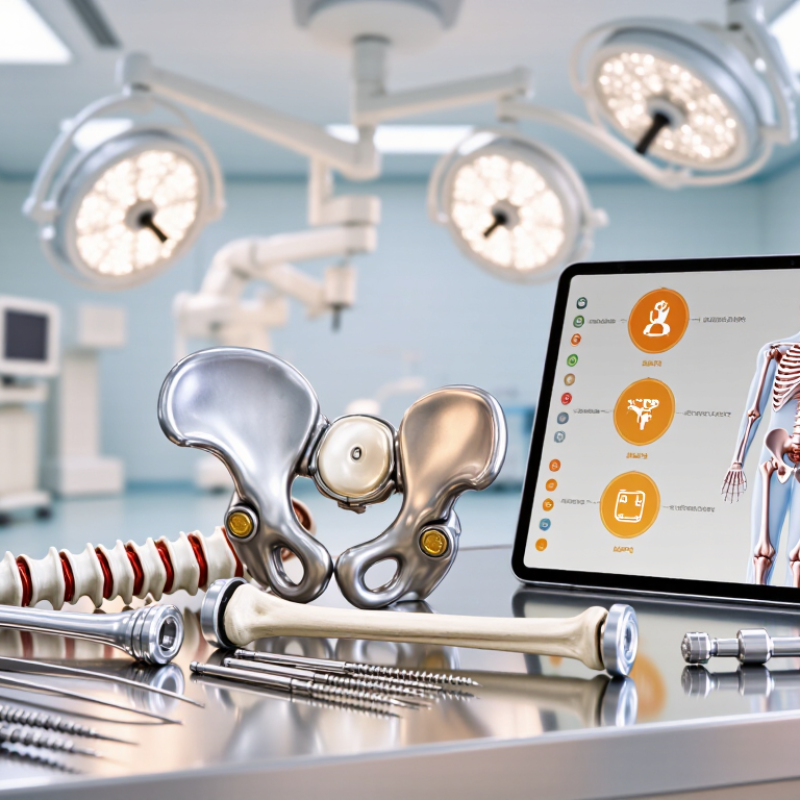
For 2026 orthopaedic device purchases, regulatory evidence should guide the shortlist. ISO Survey 2023 reported more than 31,000 ISO 13485 certificates worldwide. That figure shows broad adoption, not automatic quality. Buyers should inspect the certificate scope, audit status, and manufacturing sites. A certificate covering software may not cover implant production.
FDA clearance or approval is product-specific. It does not replace supplier quality assessment. Check the submission number, indications, predicate logic, and post-market history. FDA CDRH’s UDI program also requires reliable device identification through the Global Unique Device Identification Database. During evaluation, scan the carton and confirm the UDI-DI, lot number, and expiration date. Small errors matter.
CE marking under the MDR requires deeper review than an old conformity statement. Request the EU declaration, notified-body certificate, clinical evaluation, and post-market surveillance plan. The device class and transition status should match the product supplied. ISO 13485 records, complaint trends, and corrective-action evidence reveal operational maturity. I would not rely on a polished certificate alone. Packaging labels can still be inconsistent. That weakness deserves discussion before contracting. Data should remain traceable from implant, to shipment, to patient record, with controlled changes documented. Sources: ISO Survey 2023; FDA CDRH UDI guidance and database; European Commission MDR implementation materials.
Global buyers assessing orthopaedic device systems in 2026 should measure value beyond the purchase order. Total cost includes implants, instruments, sterilization, training, freight, inventory space, and service. An inexpensive system can become costly when trays arrive incomplete or staff need repeated instruction. Use a five-year model. Include disposal, repairs, and currency fluctuations.
Revision risk deserves separate scrutiny. Review registry findings, peer-reviewed studies, complaint trends, and local surgeon experience. Evidence should match the intended anatomy, patient population, and surgical technique. Marketing claims alone are weak evidence. Do not ignore uncertainty. No scorecard is perfect, and weighting can distort decisions when data quality varies between regions.
Tips: Request independent evidence and recent field-performance data. Check lead times, backorder history, lot traceability, and contingency stock. Confirm technical support across operating hours and languages. Ask whether critical components have qualified alternatives. A supplier may promise resilience, yet actual resilience appears during a delayed shipment or urgent revision case. Record these assumptions in the procurement file, then test them with a small, controlled evaluation before wider adoption.
*The content on this website is for general informational purposes only and should not be taken as medical advice. Please contact your physician or therapist to learn what therapy solution is suitable for your specific needs. Not all products, features, or indications shown are approved in all countries.