How to Choose Ginseng Extract Suppliers in 2026?
Choosing a Ginseng Extract supplier in 2026 requires more than comparing prices. It requires evidence. Grand View Research and Fortune Business Insights report continued growth in the global ginseng market, although their estimates differ because product categories and regions vary. That difference matters. A supplier may present impressive market figures while offering weak documentation. Buyers should examine species, origin, extraction ratio, ginsenoside profile, and batch consistency. A clear label is useful. A complete audit trail is better.
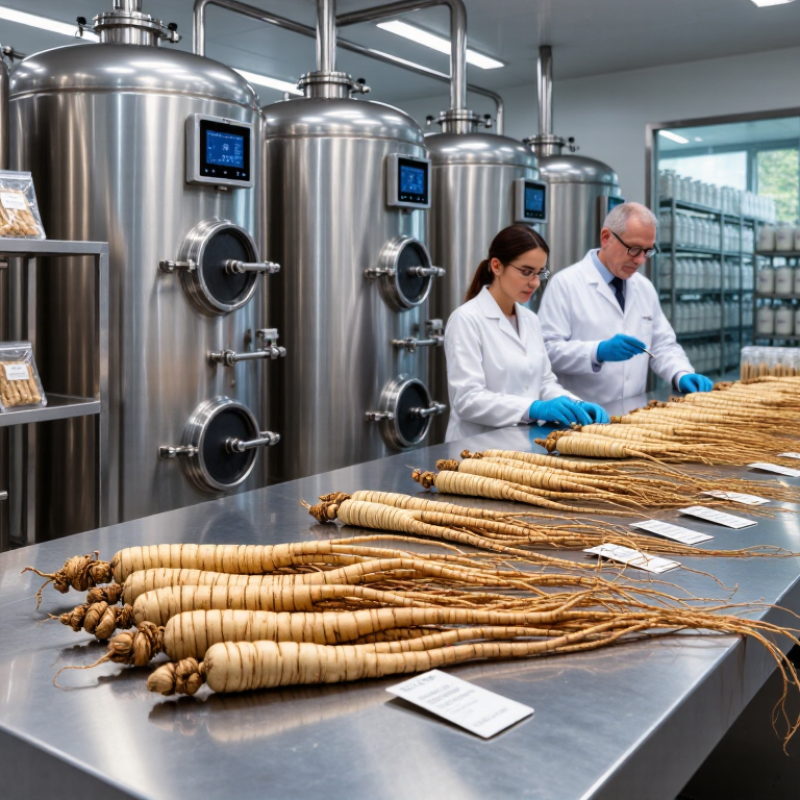
Steven Foster, an author and respected botanical researcher, has described ginseng as “the most famous medicinal plant in the world.” Its reputation creates commercial pressure, and sometimes careless claims. WHO monographs and USP quality guidance support a more disciplined approach. Ask for identity testing, heavy-metal screening, pesticide results, microbial limits, and a current certificate of analysis. Prefer HPLC data that identifies major ginsenosides, rather than a vague “standardized extract” statement. Visit the facility if possible. Look at the stainless-steel extraction tanks, sealed sample bags, and calibration records.
Certifications can help, but they do not replace verification. GMP, ISO 22000, and traceability systems should match the supplier’s actual practices. Check whether test results come from an independent laboratory. Confirm the botanical species, because Panax ginseng and Panax quinquefolius are not interchangeable. Also review harvest season, storage humidity, packaging, and recall procedures.
The best supplier may not be the cheapest. It should be transparent, technically capable, and consistent across several batches. Still, no checklist is perfect. Supplier risk changes with every new crop, market, and regulation. This guide explains how to compare evidence, question confident promises, and choose a reliable Ginseng Extract partner for 2026.
What Is Ginseng Extract and Why Does Supplier Selection Matter?
Ginseng extract is a concentrated preparation made from ginseng roots or other specified plant parts. Manufacturers use water, ethanol, or other controlled solvents to obtain active compounds. Ginsenosides are the main quality markers, but their levels vary by species, age, harvest, and processing. This variation can change taste, color, stability, and product performance. The Grand View Research Ginseng Market Report estimated the global market at USD 2.37 billion in 2023. It projects a 7.1% compound annual growth rate through 2030. Market pressure is rising.
Supplier selection therefore needs more than a competitive quotation. A reliable supplier should state the botanical species, plant part, growing region, extraction method, ratio, and marker range. Request batch-specific certificates of analysis, not generic templates. Independent testing should check ginsenosides, microbes, heavy metals, pesticides, and possible substitution. WHO reported that 170 of 194 member states recognized traditional medicine use in its Global Report on Traditional and Complementary Medicine. Wider use increases the need for traceable ingredients. One certificate is not enough. A polished document can still hide weak sampling or poor storage. I would also inspect packaging, temperature records, recall procedures, and retained samples. The checklist is imperfect. Supplier audits should be repeated, especially after a raw-material or process change.
Which Ginseng Species, Plant Parts, and Extract Forms Are Available?
Choosing a ginseng extract supplier in 2026 starts with species, not price. Panax ginseng is Asian ginseng, while Panax quinquefolius is American ginseng. Panax notoginseng is a separate species. They are not interchangeable. The WHO Monographs on Selected Medicinal Plants identify the root as the principal medicinal part for Asian and American ginseng.
Plant parts can change the extract completely. Root extracts often emphasize total ginsenosides. Leaf and stem extracts may contain different ginsenoside patterns and lower levels of certain compounds. Berry extracts deserve extra scrutiny. Their chemical profile is not simply a stronger root profile. Ask suppliers for the Latin name, plant part, harvest region, extraction solvent, and extract ratio. A clear certificate of analysis should show identity testing and marker-compound results. Small paperwork gaps matter.
Available forms include dry powders, spray-dried extracts, liquid extracts, tincture-style preparations, and standardized extracts. Standardization may target total ginsenosides or selected markers, but the stated method must be visible. HPLC results are more useful than a vague “high potency” claim. Grand View Research estimated the global ginseng market at roughly US$2 billion in 2023, although commercial reports vary widely. That difference is a warning, not a minor detail. The 2024 HerbalGram Herb Market Report also shows strong consumer demand for botanical supplements, yet market growth does not prove raw-material quality. Suppliers should provide batch-specific records, contaminant testing, and stability data. Some suppliers still present one generic specification for every plant part. That should invite questions.
How to Choose Ginseng Extract Suppliers in 2026?
Which Ginseng Species, Plant Parts, and Extract Forms Are Available?
How to read this chart: The chart counts the botanical and product options covered in this comparison. It includes four recognized Panax species, five documented plant parts, and four commonly encountered extract forms. These counts describe the available option categories, not market share or supplier performance.
Species: Asian ginseng (Panax ginseng), American ginseng (Panax quinquefolius), notoginseng (Panax notoginseng), and Japanese ginseng (Panax japonicus).
Plant parts: Root, leaf, stem, berry, and flower. When evaluating suppliers, confirm the exact plant part because ginsenoside profiles can vary significantly by part.
Extract forms: Dry extract powder, liquid extract, tincture, and soft extract. Request the extraction solvent, extract ratio, marker compounds, test methods, and certificate of analysis before purchasing.
How to Evaluate Supplier Quality, Testing, and Certifications
Choosing ginseng extract suppliers in 2026 requires more than comparing prices. I begin with the raw material, not the sales brochure. Ask for botanical identity, plant part, growing region, harvest date, and extraction method. A reliable supplier should explain how batches are received, processed, stored, and released. Request a current certificate of analysis for the exact lot. It should report ginsenosides, moisture, microbial limits, heavy metals, pesticides, and residual solvents. Vague ranges are a warning sign. So is a copied document.
Testing should be traceable to a qualified laboratory and a stated method. Check whether identity uses microscopy, chromatography, or another suitable technique. For ginsenoside testing, ask about reference standards, sample preparation, and acceptance limits. Independent testing adds confidence, especially for a new supplier. Yet it is not magic. I once focused too heavily on headline potency and overlooked inconsistent moisture results. That mistake changed my supplier checklist. Review several consecutive lots, not one attractive report. Confirm retention samples, deviation records, complaint handling, and recall procedures.
Certifications can support trust, but certificates need verification. Check the issuing body, scope, site address, expiry date, and covered processes. A quality certificate for packaging may not cover extraction. Ask whether the audited facility matches the shipping facility. Evaluate GMP systems, allergen controls, sanitation records, and change-control practices. Request a remote or onsite audit when the product matters. Good suppliers answer clearly and share limitations. No supplier is flawless. The useful question is whether problems are found early, documented honestly, and corrected with evidence.
How to Compare Sourcing Practices, Pricing, and Production Capacity
Choosing a ginseng extract supplier in 2026 requires more than comparing quoted prices. The HerbalGram 2024 Market Report valued U.S. herbal supplement sales at about $12.6 billion in 2023. Demand is growing, but quality risks remain. Ask suppliers for farm location, harvest year, drying temperature, and traceability records. A clean paper trail matters.
Compare prices by active content, not by kilogram. A cheaper extract may contain fewer total ginsenosides or require higher serving levels. Request the specification, assay method, solvent details, moisture level, and contaminant results. Independent laboratory testing should confirm identity and heavy-metal limits. WHO quality-control guidance supports documented testing throughout production. Still, documents can look perfect. I would verify recent batch records, not only certificates.
Capacity needs practical testing. Request monthly output, minimum order quantity, lead time, reserve inventory, and batch-size flexibility. Then compare a pilot order with a full production order. A supplier claiming 20 tonnes monthly should explain extraction equipment, drying capacity, and quality checks. Ask for three recent batch samples. Small details often reveal production pressure. I once focused too heavily on unit price and underestimated shipping delays. That mistake changed the comparison model. Pricing, sourcing, and capacity should be reviewed together, with every assumption recorded and challenged.
How to Verify Compliance, Documentation, and Long-Term Reliability
How to Choose Ginseng Extract Suppliers in 2026?
A reliable supplier must prove more than a clean-looking website. Request the botanical name, plant part, extraction solvent, country of origin, and batch number. Compare these details with the certificate of analysis. The test should show ginsenoside levels, identity testing, microbial limits, heavy metals, pesticides, and residual solvents. Ask whether an independent laboratory performed the analysis. Do not accept “tested” without methods, detection limits, and dates.
Compliance evidence should match your destination market. In the United States, suppliers should demonstrate controls aligned with 21 CFR Part 111. For European sales, request documentation supporting contaminant limits, traceability, and approved claims. WHO’s 2019 Global Report on Traditional and Complementary Medicine found that 88% of Member States acknowledged using traditional medicine. That scale increases the need for disciplined botanical controls, not weaker ones.
Check the supplier’s GACP or equivalent cultivation records, change-control procedure, recall plan, and storage temperature logs. Review at least three recent batches, not one perfect sample. Speak with the quality manager, not only the salesperson. Request audit reports, corrective-action records, insurance details, and realistic lead times. A supplier promising unlimited stock deserves closer questioning. Paperwork can still lie. I would also test a retained sample independently before signing a long contract. No audit is flawless; seasonal variation, adulteration, and delayed testing can still expose gaps. Reliability is demonstrated through consistent evidence over time.