Choosing Surgical Dressing Pads in 2026 means matching the pad to the wound, not simply selecting the thickest or most absorbent option. In clinical use, a dressing must manage expected exudate, stay in place, and come away without unnecessary skin trauma. The right choice varies with the incision, the patient’s skin, and the care setting. Small details matter.
The World Health Organization’s 2018 Global Guidelines for the Prevention of Surgical Site Infection cite an estimated 11.8 infections per 100 surgical patients in low- and middle-income settings. This figure describes infection burden, not the performance of any particular dressing. That distinction matters. NICE’s 2019 Surgical site infections guideline recommends covering surgical wounds with an appropriate dressing after surgery, but it does not identify one pad as suitable for every incision.
This guide examines practical selection factors, including absorbency, gentle adhesion, flexibility, sterile packaging, and the product’s stated intended use. A pad over a straight abdominal incision faces different demands from one near a moving joint, where edges may lift. Fragile skin or heavier drainage can also change the decision. Not a trivial choice. I would check product instructions and clinical protocols rather than infer performance from a label alone. Evidence is not perfectly tidy: dressing designs and study methods vary, and direct comparisons may be limited. The aim here is a grounded way to assess Surgical Dressing Pads in 2026, while leaving wound-specific decisions to qualified clinicians.
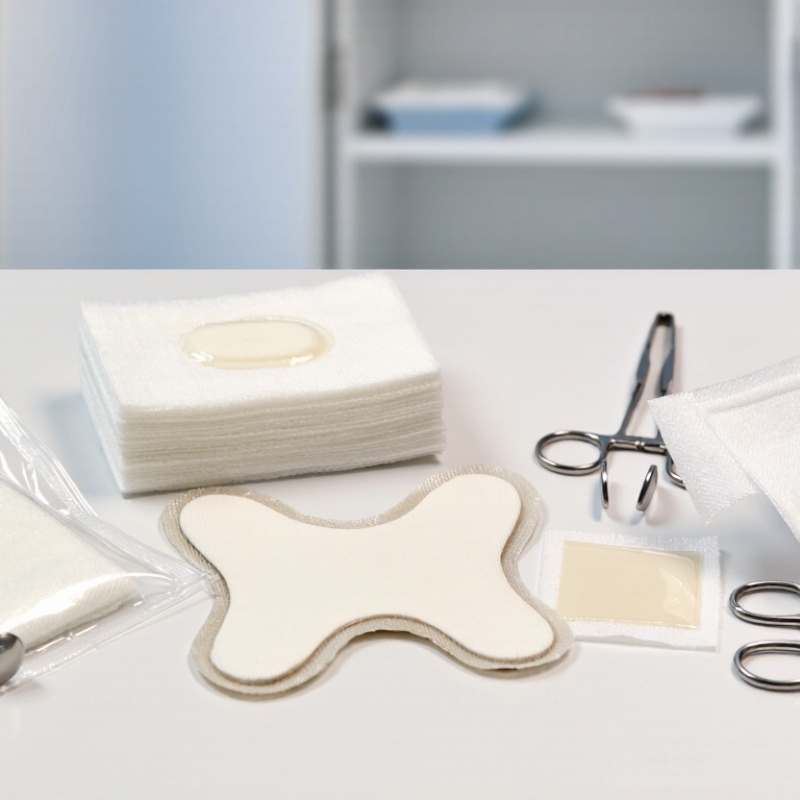
Choose a surgical dressing pad by matching it to the wound and its fluid output, not by size alone. A closed, dry incision may need a simple protective pad, while an open wound with drainage needs enough absorbency to manage moisture. Check the wound bed, edges, and nearby skin during each dressing change. Is fluid clear, blood-tinged, or cloudy? Is the pad damp at the center or soaked through? These details help guide the choice. Low-output wounds can be harmed by overly absorbent materials that dry the surface; heavy drainage can overwhelm a thin pad and leave skin wet. Neither is ideal.
A 2018 systematic review in The Lancet Infectious Diseases estimated 11.2 surgical-site infections per 100 operations in low- and middle-income countries, about 2.9 times the rate in high-income settings. This population-level finding does not predict an individual wound, but it underlines why careful monitoring matters.
Record how quickly a pad becomes wet, and look for leakage, odor, increasing redness, or tenderness. A neat-looking dressing is not proof that the wound is doing well. It is easy to focus on the product and overlook the skin beneath it. Reassess the wound and follow the care team’s instructions, especially when drainage changes or the incision opens.
Surgical dressing pads should match the wound’s fluid level, tissue condition, and expected review schedule. Gauze is familiar, easy to layer, and useful when clinicians need frequent visual checks. But dry gauze can stick to the wound bed, making removal uncomfortable and potentially disturbing fragile tissue. It may also need changing more often when drainage is heavy.
Advanced fiber dressings, including alginate and cellulose-based materials, absorb fluid and form a soft gel. This can help manage moderate or heavy exudate while maintaining a moist wound surface. Check the edges, though: a saturated pad may leak, and some products need a secondary cover. For a dry wound, a highly absorbent fiber may be the wrong fit. Absorbency alone is not enough.
Evidence does not support a simple “best dressing” rule. A 2016 Cochrane review assessed 29 trials involving 5,718 people with surgical wounds healing by primary intention. It found insufficient evidence that one dressing type reliably reduced infection or improved healing over another. The evidence is imperfect. In practice, clinicians should consider drainage, skin sensitivity, removal comfort, and inspection needs, then reassess the wound as conditions change. A pad that works on day one may not suit day four.
For a 2026 purchase, verify the product’s regulatory status, not just its packaging. Under 21 CFR 878.4014, the FDA classifies surgical dressings as Class I medical devices. Many are exempt from 510(k) premarket notification, subject to the limitations in 21 CFR 878.9. Class I still carries FDA general controls. Not a free pass. Check that the product’s intended use and description match the classification being claimed.
MarketsandMarkets’ Wound Care Market report estimated the global wound-care market at $21.4 billion in 2023 and forecast $27.2 billion for 2028. That broad category includes products beyond surgical dressing pads, so treat the figures as market context, not a pad-specific forecast. For a practical check, compare the dressing’s labeling and supplier documentation for intended use, sterility, absorbency, and materials. A 510(k) exemption does not establish that a pad suits every wound or proves clinical superiority. I would verify the details twice; paperwork can still be vague.
A surgical dressing pad should cover the incision and a small margin of surrounding skin, without bunching or extending far beyond the wound. Measure the area when practical, then choose a pad that can absorb expected drainage. A tiny pad may leave the incision exposed as fluid spreads. An oversized one can wrinkle beneath clothing or press on nearby skin. Fit matters.
Securement depends on the site. A pad over a relatively flat abdomen may stay in place with gentle tape, while a dressing near a knee or shoulder must tolerate bending and movement. On fragile or sweaty skin, strong adhesive can cause irritation or pull at the skin during removal. Not too tight. Follow the care team’s instructions, especially when the incision has stitches, staples, drains, or a prescribed dressing system.
Check that the pad stays centered during ordinary movement and that its edges remain sealed when required. If it shifts, leaks, becomes saturated, or causes increasing discomfort, contact the surgical team for guidance rather than improvising with extra layers. There is no perfect size chart for every body shape or incision. That uncertainty is easy to overlook; the surgeon’s directions and the wound’s condition should guide the final choice.
Example pad-length planning by incision site. The pad-length examples add 2.5 cm of coverage beyond each end of the incision; actual dimensions and securement depend on the wound, location, clinical protocol, and product instructions.
Choosing and securing: Use a pad that covers the incision with an appropriate margin. Consider the site’s movement, moisture, skin condition, and surrounding contours when choosing securement; ensure it holds the pad in place without restricting movement or causing excessive tension. Incision sizes shown are planning examples, not clinical averages or a substitute for professional guidance.
How to Choose Surgical Dressing Pads in 2026?
The CDC reports that 2%–4% of patients undergoing inpatient surgery develop surgical site infections (SSIs). That figure makes sterile packaging a practical selection criterion, not a decorative claim. Choose pads in individually sealed packs, and inspect each seal for tears, moisture, or punctures before use. Check the expiry date, too. Small details matter.
A sterile pad cannot prevent infection on its own. CDC prevention guidance emphasizes measures such as hand hygiene and aseptic wound care. The WHO’s Global Guidelines for the Prevention of Surgical Site Infection recommend covering a closed incision with a sterile dressing for 24–48 hours, while noting limited evidence for this practice. That uncertainty deserves attention. Packaging helps preserve sterility until use, but careful handling after opening matters just as much.
Match the pad to the wound by considering incision size, drainage, and whether its contact layer should resist sticking. For a heavily oozing incision, inadequate absorption can leave surrounding skin damp; an oversized pad may wrinkle under clothing. Keep unused packs dry and intact, and discard any with a compromised barrier. In clinical settings, follow local protocols and the treating professional’s instructions. A label alone is not enough.
| Selection Dimension | What to Check | Practical Selection Guidance |
|---|---|---|
| Sterile packaging | Confirm the pad is labeled sterile and its individual package is sealed, dry, and free from tears, punctures, or other damage. | Use only intact sterile packaging. If the package is damaged, wet, open, or otherwise compromised, do not use the pad; follow facility policy for replacement and disposal. |
| Expiration and storage | Check the expiration date and any storage conditions on the product labeling. Look for signs of moisture, contamination, or package deterioration. | Do not use expired supplies. Store and handle dressings according to the manufacturer’s instructions and the healthcare facility’s sterile-supply procedures. |
| Pad size and wound coverage | Compare the pad’s dimensions with the incision and the area that needs protection. Consider the size of the wound and surrounding skin. | Choose a pad that covers the incision as directed by the treating clinician. There is no single pad size appropriate for every surgical wound. |
| Absorbency | Consider the expected amount of wound drainage and whether the dressing can manage it without leaking or becoming saturated too quickly. | Select absorbency based on the wound’s needs and the care plan. Reassess or change a dressing when indicated by the clinician or facility protocol. |
| Material and wound contact | Review the product labeling for construction, intended use, and any patient sensitivities to dressing materials or adhesives. | Choose a product suitable for the wound and patient. Ask the clinical team to assess sensitivities and whether a non-adherent contact layer is needed. |
| Securement and removal | Determine whether the pad is self-adhesive or requires separate tape or another method of securement. Consider the surrounding skin. | Use securement compatible with the patient’s skin and care plan. Apply and remove the dressing as instructed to avoid unnecessary skin trauma. |
| Dressing-change instructions | Check the clinician’s instructions for when to leave the dressing in place, inspect the wound, and change or remove the pad. | Follow the patient-specific care plan. CDC guidance recommends protecting a primarily closed surgical incision with a sterile dressing for 24–48 hours after surgery. |
| Infection-prevention context | A dressing is one part of surgical-site infection prevention; it does not replace appropriate hand hygiene, aseptic technique, or wound-care instructions. | Use sterile supplies and follow healthcare-facility protocols. Contact a healthcare professional about increasing redness, warmth, pain, drainage, fever, or other concerning changes. |
Data note: CDC materials report that surgical-site infections occur in approximately 2%–4% of patients undergoing inpatient surgery. The risk varies by procedure and patient factors; choosing a dressing alone cannot prevent an infection. Follow current clinical guidance and product labeling.
*The content on this website is for general informational purposes only and should not be taken as medical advice. Please contact your physician or therapist to learn what therapy solution is suitable for your specific needs. Not all products, features, or indications shown are approved in all countries.