Choosing a facial microneedling device in 2026 can feel less like shopping and more like sorting through claims. Facial Microneedling tools range from basic rollers to powered pens, and their differences matter at the skin’s surface. A polished handle proves little about needle consistency, hygienic design, or after-sale guidance. Small details matter.
Start with the intended use, your skin concerns, and whether a qualified clinician should guide treatment. Needle depth, cartridge fit, speed control, and clear instructions are more useful than flashy modes. Look for transparent product specifications, realistic claims, and evidence that supports the device’s stated purpose. Check how the manufacturer explains cleaning and replacement parts. No feature list is enough.
Skin is individual. Irritation, infection, pigment changes, and scarring are possible concerns, especially when treatment is too aggressive or performed on unsuitable skin. People with active skin problems, a history of raised scars, or uncertainty about treatment should seek advice from a licensed healthcare professional before buying. That step can save money and prevent avoidable harm. This guide compares the practical features, safety considerations, and value that deserve attention in 2026. It also asks a less comfortable question: whether an at-home device is the right choice at all.
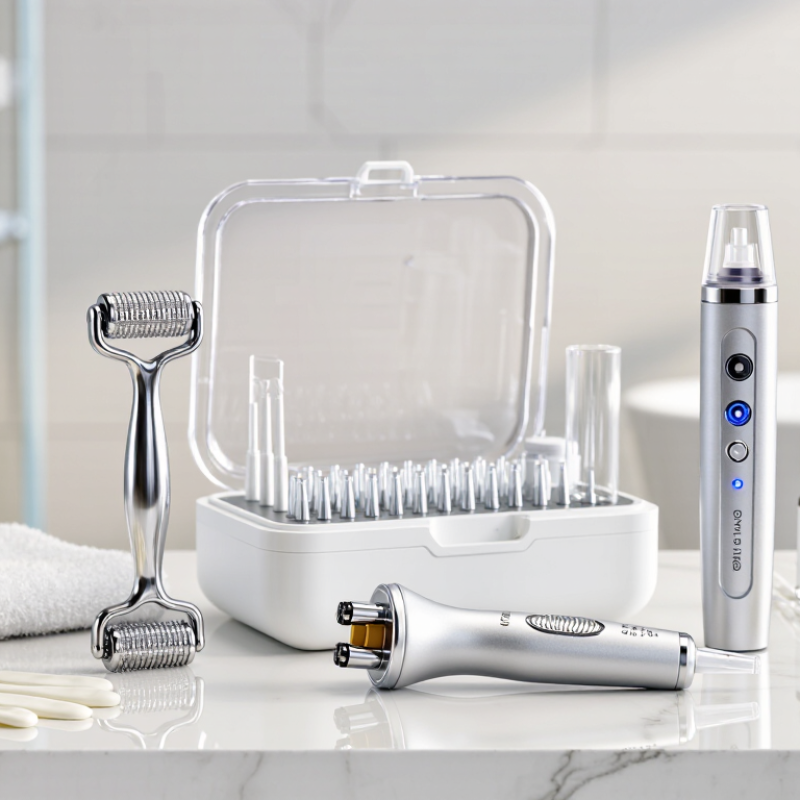
Facial microneedling devices use fine needles to create controlled, tiny punctures in the skin. These trigger a wound-healing response, including collagen remodeling, which may gradually soften the appearance of certain scars and fine lines. Results depend on needle depth, treatment technique, skin condition, and healing time. A deeper setting is not automatically better. It can increase irritation and injury risk. That distinction matters.
Device design varies. Manual rollers move across the skin; automated pens make repeated vertical punctures, often with adjustable depth and speed. For home devices, needles are generally shorter, but “short” does not mean risk-free. The American Academy of Dermatology says professional microneedling commonly involves three to six treatments, spaced two to four weeks apart. This schedule is a useful reality check: visible change usually takes time, not one session. A device’s instructions and a clinician’s assessment should guide treatment decisions, especially for darker skin tones, active acne, or a history of raised scars.
Tips: Check that cartridges are sterile and single-use, and never share a device. Avoid treating inflamed or infected skin. Do not push hard to chase redness; redness is not proof of better results. I still find depth labels easy to overinterpret. Ask a qualified dermatologist what a setting means for your skin before using it.
| Device type | How it works | Typical use and setting | Key considerations | How to assess suitability |
|---|---|---|---|---|
| Manual microneedling roller | A hand-rolled cylinder carries rows of fine needles that enter the skin at an angle as the device moves across it. | Some products are marketed for home use, but penetration and results can be difficult to control. Needle length alone does not reliably indicate how deeply a needle enters the skin. | Repeated rolling can cause uneven pressure, irritation, or skin injury. Needles can become contaminated or damaged if the device is reused or cleaned improperly. | Do not choose by needle length alone. Check whether the product is legally marketed for the intended use in your location, and ask a qualified clinician before using a device that punctures the skin. |
| Automated microneedling pen | A motor moves a needle cartridge rapidly in and out of the skin. A trained operator can adjust settings such as needle depth and speed for different areas. | Commonly used in professional settings for concerns such as acne scars or uneven skin texture. Treatment settings are individualized rather than one-size-fits-all. | Temporary redness, swelling, pinpoint bleeding, and sensitivity may occur. Infection, pigment changes, or scarring are possible, particularly with improper technique or unsuitable skin conditions. | Look for a qualified, trained provider, sterile single-use cartridges, and a consultation that covers skin history, expected recovery, and realistic outcomes. |
| Radiofrequency (RF) microneedling | Needles enter the skin and deliver radiofrequency energy, producing heat in targeted tissue as well as mechanical micro-injuries. | Usually performed by a trained professional. Device design, energy delivery, needle depth, and treatment plan differ; settings should be selected for the individual. | It has additional heat-related risks. Burns, scarring, pigment changes, and loss of underlying facial fat have been reported with RF microneedling. It is not simply a stronger version of a home roller. | Discuss the specific device, operator training, risks, and alternatives with a qualified clinician. Avoid treatment by an untrained operator or at-home RF microneedling. |
| Shallow cosmetic needling products | Products described as “micro” or “cosmetic” needling may make very superficial contact or create small punctures; product design and actual skin penetration vary. | Often marketed for cosmetic routines, but claims and permitted uses differ by product and jurisdiction. | Terms such as “micro” do not establish safety, effectiveness, or regulatory status. Puncturing the skin can increase irritation and infection risk. | Read the instructions and regulatory information carefully. Do not assume that a cosmetic label means a product is suitable for every skin type or safe to share. |
| Non-needling alternatives | Options such as topical skincare, professional chemical peels, or certain laser treatments work through different mechanisms and do not use needles to puncture the skin. | May be considered when needling is unsuitable or when a person prefers a different approach. The appropriate option depends on the concern and skin type. | These treatments have their own risks, recovery periods, and limitations; they are not direct substitutes for every microneedling indication. | Ask a dermatologist or other qualified clinician to compare options based on your goals, medical history, skin tone, and tolerance for downtime. |
Safety note: Microneedling creates controlled skin punctures to trigger a wound-healing response; it does not guarantee a particular result. Avoid treatment over active skin infections or inflamed skin, and seek medical advice if you have a history of keloid scars, a bleeding disorder, impaired wound healing, or take medicines that affect bleeding or immunity. In the United States, FDA-cleared microneedling devices are intended for professional use; regulatory status varies by country. Do not use a microneedling device to push cosmetics or medicines into the skin unless a qualified clinician specifically advises it.