Why Are Aerogel Strips Essential for Modern Insulation Solutions?
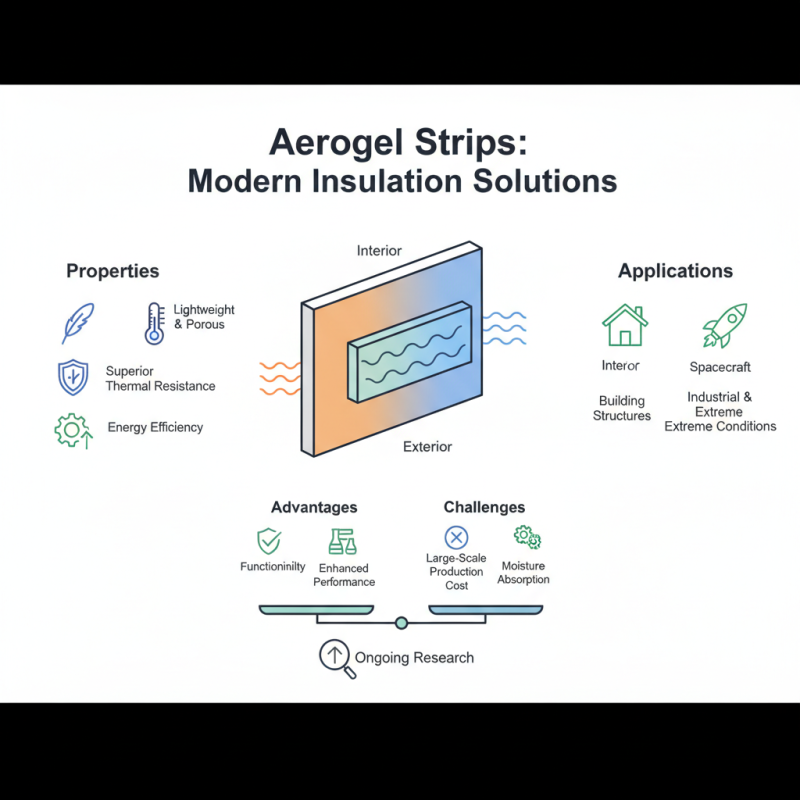
In an era where energy efficiency is a priority, Aerogel Strips emerge as a game-changer. These lightweight and porous materials hold remarkable insulation properties. They are essential in various applications, from building structures to spacecraft. The unique design of aerogel strips allows for superior thermal resistance.
Aerogel strips offer not only functionality but also versatility. They can adapt to different environments, ensuring effective insulation even in extreme conditions. Engineers and architects are increasingly embracing these materials to enhance energy performance. However, challenges remain in large-scale production and cost.
While aerogel technology is promising, it is important to critically assess its limitations. Durability and moisture absorption remain concerns for some applications. Ongoing research aims to address these issues and improve the reliability of aerogel strips in the long term. This exploration of aerogel strips underscores their vital role in modern insulation solutions.
Understanding Aerogel: Properties and Composition
Aerogel is a fascinating material with unique properties that make it stand out in modern insulation solutions. Created from a gel, aerogels have a very low density, often described as "frozen smoke." This structure gives aerogels their exceptional insulating capabilities. They effectively reduce heat transfer, making them ideal for buildings, spacecraft, and even clothing.
The composition of aerogels is primarily silica, but other substances can enhance their performance. The porous nature of aerogels contributes to their low thermal conductivity. Interestingly, despite their lightness, they can withstand significant pressure. However, working with and manufacturing aerogels remains a challenge, mainly due to their fragility and cost. This reality encourages continuous research and improvement in aerogel technology.
Tips for using aerogel strips in insulation:
- Ensure proper installation to prevent air leaks.
- Consider combining aerogels with other insulation types for enhanced efficiency.
- Regular inspections can help identify any damage or performance issues, ensuring optimal insulation.
- Be aware that while aerogels are promising, not every application is suitable. Understanding the specific needs of your project is crucial for effective use.
The Role of Aerogel Strips in Thermal Insulation
Aerogel strips are making waves in the world of thermal insulation. These innovative materials offer incredible benefits. They are lightweight, highly effective, and energy-efficient, making them vital for modern construction. Their structure, which consists of up to 99.8% air, contributes to their low thermal conductivity. This means that aerogel strips can significantly reduce heat transfer.
In practical applications, aerogel strips excel in challenging environments. Whether in buildings or aerospace, these strips provide reliable insulation. They are ideal for spaces where traditional materials fall short. Reducing energy bills is a tangible benefit. However, the production costs can raise questions about their widespread use. Balancing cost and performance remains a challenge for many builders.
The versatility of aerogel strips can't be overlooked. They can conform to varying shapes and sizes, which allows for creative applications. Yet, some argue that more research is needed to understand their long-term durability. As industries continue to evolve, these materials will play a critical role in energy efficiency. The path forward looks promising, yet careful consideration is essential for broader adoption.
Comparative Analysis: Aerogel vs. Traditional Insulation Materials
Aerogel is making waves in the insulation sector. Its unique structure allows for incredible thermal resistance. Studies show that aerogel provides up to 95% of heat retention compared to traditional materials like fiberglass and foam. This can lead to substantial energy savings in buildings, reducing heating and cooling costs dramatically.
In contrast, traditional insulation materials often struggle with moisture retention. Moisture can reduce their effectiveness, leading to increased energy bills. A report from the U.S. Department of Energy indicates that conventional insulation loses about 20% of its effectiveness in humid conditions. Aerogel, being non-hygroscopic, avoids this issue. Its lightweight and thin profile also makes it easier to handle and install.
Tip: When considering insulation options, evaluate the long-term energy savings alongside the initial costs. Choosing materials that maintain thermal efficiency over time can result in significant savings.
Moreover, while aerogel seems superior, it is not without challenges. Its manufacturing process can be costly and complex. Some may find installation cumbersome without proper guidance. Yet, the benefits often outweigh these hurdles, especially when aiming for sustainable solutions.
Applications of Aerogel Strips in Various Industries
Aerogel strips are gaining traction across various industries. Their unique properties make them invaluable for modern insulation needs. In construction, these strips provide superior insulation, reducing energy costs by up to 30%. A report from the U.S. Department of Energy highlights that buildings account for nearly 40% of energy consumption. Hence, efficient insulation is crucial.
In the aerospace sector, aerogel strips are essential for lightweight insulation. They help reduce the overall weight of aircraft, improving fuel efficiency. According to a study by NASA, using aerogel materials can enhance thermal protection systems by up to 50%. This reduction in weight not only cuts costs but also meets strict environmental regulations.
Furthermore, the automotive industry is beginning to embrace aerogel technology. The strips are now being integrated into electric vehicles to minimize heat loss. A recent market analysis forecasts that the demand for aerogel in the automotive market will grow at a CAGR of 25% over the next five years. However, challenges remain in material production and scalability. For many companies, adapting to these cutting-edge materials requires significant investment and R&D efforts. Balancing innovation with practicality remains a complex task in these evolving industries.
Applications of Aerogel Strips in Various Industries
Future Prospects of Aerogel Technology in Insulation Solutions
Aerogel technology is gaining traction in insulation solutions, showcasing promising future prospects. Research indicates that aerogels can achieve thermal conductivities as low as 0.013 W/m·K. This remarkable property makes them one of the best insulating materials available. Their lightweight and highly porous structure significantly reduces heat transfer. As the demand for energy-efficient buildings rises, the integration of aerogel in construction is becoming more relevant.
Industry reports forecast a compound annual growth rate for aerogel in insulation applications to reach 20% by 2025. This surge highlights the increasing adoption of aerogel-based materials in various sectors, including residential and commercial buildings. While these materials show great promise, challenges persist. For instance, the cost of production remains relatively high, limiting widespread use. Moreover, the fragility of aerogel requires careful handling during installation to avoid breakage.
Despite these issues, the ongoing research in nanotechnology is likely to enhance aerogel’s durability and reduce manufacturing costs. Innovations in recycling aerogel could make it a more sustainable choice. As engineers explore new applications, awareness around aerogel’s eco-friendly potential is growing. These developments could pave the way for more robust and affordable insulation solutions in the near future.