Why Choose Strong Base Anion Resin for Water Treatment?
Water treatment plays a crucial role in maintaining public health and environmental safety. Among the various methods available, strong base anion resin stands out for its effective removal of contaminants. This resin type can target a wide range of impurities, making it highly versatile.
Using strong base anion resin enhances water quality by exchanging harmful ions with benign ones. The structure of this resin allows for efficient binding, leading to better results in various applications. This adaptability makes it suitable for industries requiring pure water. However, it demands precise operational conditions to perform optimally.
Not all water treatment methods achieve the same level of efficacy. Some may overlook the importance of ion exchange resins, leading to suboptimal outcomes. The choice of strong base anion resin, while beneficial, requires careful consideration of specific water quality needs. Understanding these nuances can lead to more effective water management solutions.
Definition and Characteristics of Strong Base Anion Resin
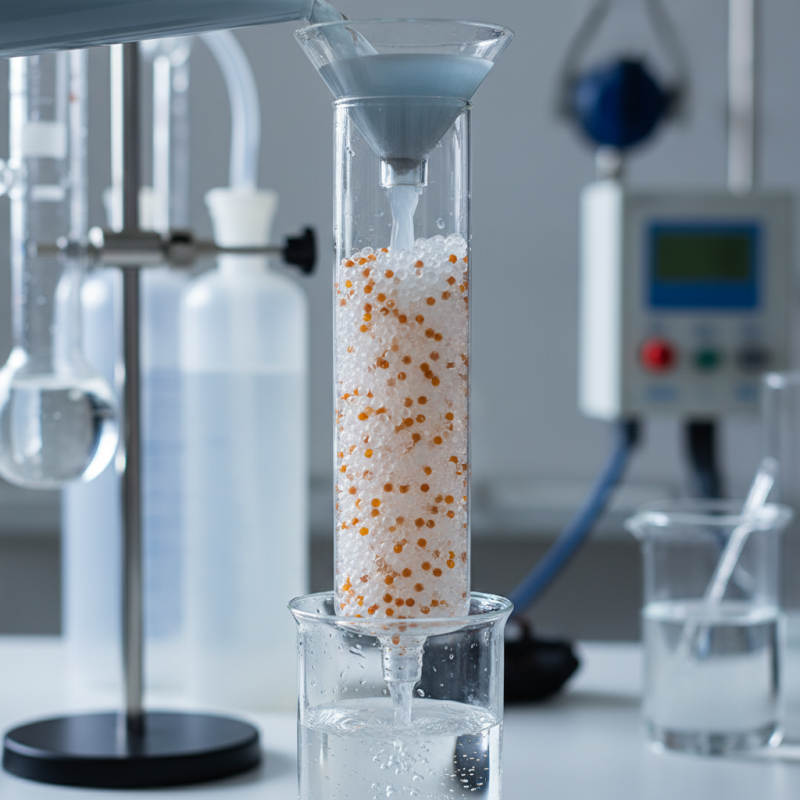
Strong base anion resin is essential in water treatment processes. These resins are made from highly cross-linked polystyrene. They contain quaternary ammonium groups, which give them a strong affinity for anions. This makes them effective at removing a variety of contaminants, including nitrates, sulfates, and arsenates.
Strong base anion resins excel particularly in high pH environments. According to recent studies, they can remove more than 90% of anions from water sources. This efficiency is crucial for industries needing purified water. Depending on the application, regeneration can be performed using strong sodium hydroxide solutions. This process effectively restores the resin's functionality.
Tips: Always consider the specific contaminants present in your water. Not all resins are the same. Monitor performance regularly. Replacing or regenerating resin too late can lead to reduced water quality. This is often overlooked but vital for compliance and safety.
While strong base anion resins are effective, they are not perfect. Their performance can vary depending on temperature and concentration of ions. Furthermore, the initial cost of these resins can be high for some treatment facilities. Making informed choices about type and quantity is crucial.
Advantages of Using Strong Base Anion Resin in Water Treatment
Strong base anion resins are essential for effective water treatment. They excel at removing unwanted ions. These resins work by exchanging harmful anions with harmless ones. They target contaminants like nitrates and sulfates effectively.
A key advantage of strong base anion resins is their broad range. They handle various anion forms effectively, including bicarbonates. This versatility allows for cleaner water in different settings. They respond well to varying water chemistries too. You can rely on them for consistent performance. Yet, their effectiveness may decline under specific extreme conditions. Monitoring is necessary to maintain their performance.
These resins provide long-term benefits in water quality. They can extend the lifespan of water systems. Users notice clearer water and improved taste. However, it's crucial to ensure proper installation and maintenance. Neglect can lead to resin fouling. This aspect requires careful consideration. Continuous learning and adaptation are vital for optimal results.
Comparison with Other Ion Exchange Resins
When it comes to water treatment, strong base anion resins stand out due to their effectiveness. These resins are designed to target a range of contaminants, including heavy metals and organic compounds. Their high exchange capacity allows for the removal of a larger quantity of anions compared to weaker alternatives. This can lead to better water quality in industrial and municipal applications.
Other ion exchange resins often focus on specific contaminants, such as cations or weaker anions. For instance, weak base resins may not effectively remove certain complex anions. They also might show limitations with pH variations. In contrast, strong base anion resins remain effective across a broader pH range. This adaptability makes them a preferred choice for complex water chemistries.
However, it's important to note that no resin is perfect. Strong base anion resins can be more costly than their weaker counterparts. They may also require more careful handling and regeneration processes. Over time, some users may find that their performance declines if not maintained properly. Weighing the benefits against potential challenges is essential for optimal water treatment strategies.
Applications of Strong Base Anion Resin in Various Industries
Strong base anion resins have a wide range of applications across multiple industries. In water treatment, they are crucial for removing contaminants. Data from industry reports indicates that these resins can effectively reduce harmful ions like sulfate and nitrate. They work efficiently in both industrial and municipal settings.
In the pharmaceutical industry, strong base anion resins play a vital role. They help purify water used in drug manufacturing. The purity of water is essential here. Reports suggest that water quality affects up to 30% of drug production efficiency. Manufacturers must pay close attention to filtration techniques.
Food and beverage industries also rely on strong base anion resins. They help in ensuring that the flavor and quality of products remain consistent. Poor water quality can cause variable taste and spoilage. Some studies show that improper water treatment can lead to a 15% increase in product waste. Hence, consistent quality in water is necessary for profitability.
Maintenance and Regeneration of Strong Base Anion Resin Systems
When it comes to the maintenance of strong base anion resin systems, careful attention is crucial. These resins are vital in water treatment, aiding in the removal of unwanted contaminants. However, they require efficient maintenance to ensure optimal performance. Regular monitoring of resin conditions can help identify when regeneration is necessary. Reports indicate that ignoring maintenance can lead to significant declines in ion exchange efficiency, sometimes as much as 30% within just a few months.
The regeneration process itself involves the careful use of strong chemical agents. These agents can rejuvenate exhausted resins. However, if implemented improperly, they can also lead to further degradation of resin quality. A study published by industry experts noted that improper regeneration techniques could decrease resin lifespan by up to 40%. Thus, operators must receive adequate training to handle the nuances of this process.
Another point of reflection is the environmental impact of regeneration waste. Efficiently managing spent regenerants can become a challenge. Some facilities report difficulties in handling this waste, contributing to larger environmental concerns. It’s essential to implement proper disposal methods to mitigate these issues. The balance between effective water treatment and environmental stewardship is a delicate one that needs continuous evaluation.