7 Tips for Buying Paper Takeaway Containers

Paper Takeaway Containers may look simple, but the wrong choice can leave sauce on the bag, steam-softened sides, or a meal that arrives out of shape. Buying well means looking beyond price and appearance. Buyers need to match the container to the food, delivery time, serving size, and storage conditions. A shallow kraft tray may suit fries, while a coated, leak-resistant box may better handle curry or dressing. Small details matter. Lid fit matters. So does how easily staff can stack containers during a busy lunch rush.

Packaging specialist Maya Chen offers a practical buying principle: “A good container protects the food, fits the service, and makes disposal clearer.” Use that idea to compare material strength, grease resistance, ventilation, closure security, and supplier consistency. Ask for samples, then test them with actual menu items—not an empty box on a desk. Hold a warm meal inside for the usual delivery period. Check for soft corners, trapped condensation, and leaks. It is a simple test.

There is no perfect container for every menu. A choice that works for dry pastries may fail with hot, oily food. And a lower unit price can hide waste from poor sizing or damaged deliveries. Some test results may disappoint. That is useful information, not a reason to ignore the problem. The tips ahead help buyers ask sharper questions, compare practical trade-offs, and choose Paper Takeaway Containers that suit real service conditions.
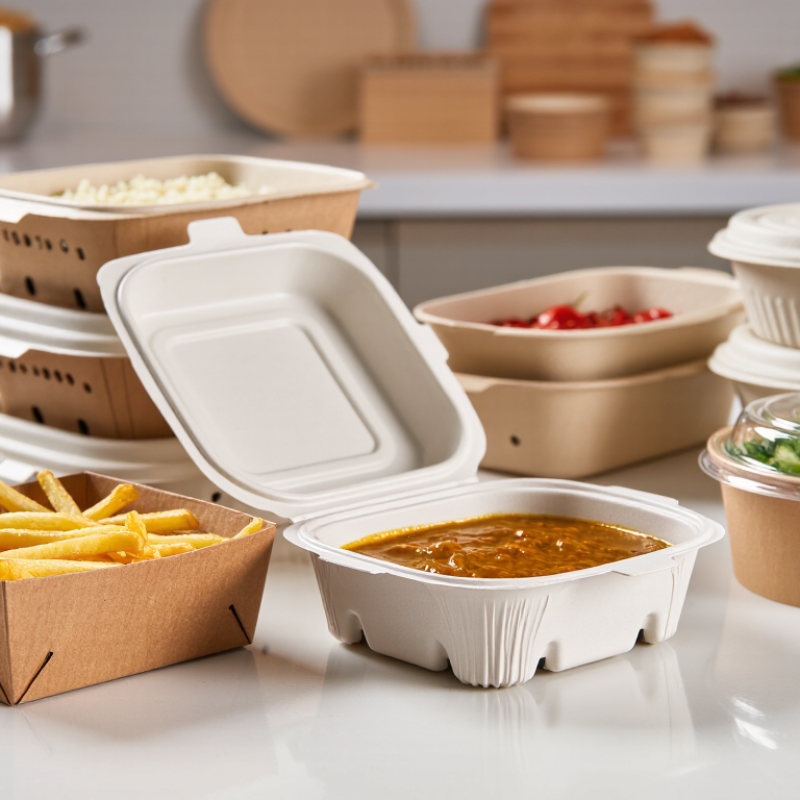
7 Tips for Buying Paper Takeaway Containers

Identify Your Food, Service, and Packaging Requirements

Start with the menu. A dry pastry needs different protection from saucy noodles or a hot, oily breakfast. Match the container’s size and shape to the portion, then check how it performs after several minutes of steam and handling. A lid that traps moisture can soften crisp food. A vent may help, but it can also let heat escape.

Tip 1: Test the actual menu. Place the busiest items in sample containers, stack them, and check for leaks, crushed corners, and soggy food after a realistic delivery time. Tip 2: Map the service. Dine-in, counter pickup, and delivery create different needs for lid security, stacking, and labeling. A common miss is choosing one container for every dish. It may simplify ordering, but it can compromise food quality.

The National Restaurant Association’s 2024 State of the Restaurant Industry report estimates that nearly 75% of restaurant traffic is off-premises, making transport performance essential. The EPA’s 2018 waste report found that containers and packaging generated 82.2 million tons of municipal solid waste. Ask suppliers for material specifications, grease resistance, and guidance on local recovery options; a paper container is not automatically recyclable or compostable everywhere. Tip 3: Compare the full service requirement, not just the unit price. Consider storage space, packing speed, and whether staff can close each lid securely. A short trial is useful. It may still miss a busy Friday rush.

Compare Paper Types, Coatings, and Sustainability Claims

Paper takeaway containers vary more than their brown surfaces suggest. Uncoated kraft board suits dry foods, while oily curries need a grease-resistant barrier. Folding paperboard is light; molded fiber has a different shape and feel. Check the supplier’s specification for coating type, heat limits, and leak resistance. A shiny inner lining may hint at a barrier, but it cannot identify the material. Look closer.

Coatings can change what happens after use. Ask whether the container uses polyethylene, a water-based barrier, or another treatment, and whether local facilities accept it. The U.S. EPA’s 2018 Advancing Sustainable Materials Management report estimated a 80.9% recycling rate for paper and paperboard containers and packaging. That figure covers a broad category, not every coated food box. It is easy to overread.

Treat sustainability claims as questions, not proof. “Recyclable” does not guarantee local collection, and “compostable” matters only where suitable processing is available. Ask for the basis of recycled-content claims, relevant test documentation, and clear disposal guidance. At a packing station, a box may hold a hot, oily meal for an hour; a vague label says little about that real use. Check the details.

Match Container Shapes and Sizes to Menu Items

7 Tips for Buying Paper Takeaway Containers
Match Container Shapes and Sizes to Menu Items

The right container protects food and makes it easier to carry. A National Restaurant Association 2024 industry report found that 47% of U.S. adults picked up restaurant takeout weekly. That makes practical packaging a regular part of the meal experience. Fit matters. Match shallow, wide trays to sandwiches and flatbreads, and deeper bowls to noodles or saucy dishes. For soup, check that the lid closes securely and leaves room to prevent spills.

Tip: Test portions before ordering in bulk. A container should hold the usual serving without crushing toppings or leaving excessive empty space. Separate compartments can keep rice apart from sauce, but they may take up more storage space. Fried foods need room for steam to escape; a tightly sealed box can soften crisp edges. Not every item will fit one perfect size. That is worth checking.

Ask suppliers for internal dimensions, not just exterior measurements, and test containers with hot, full portions. Stack filled samples to check stability during pickup. A paper box that looks roomy when empty may feel cramped once food is added. Small details matter.

Check Heat Resistance, Leak Protection, and Food Safety

Heat matters. A paper container should keep its shape with the actual food you plan to serve, not just look sturdy on a shelf. Check the supplier’s temperature guidance for hot meals, sauces, and reheating. Then test a sample with a freshly packed dish. Watch for soft corners, warped lids, or a base that becomes difficult to hold. Steam can weaken paper faster than expected.

Leak protection needs a practical check. Fill a sample with soup or oily noodles, close it, and leave it on its side briefly over a clean tray. Look for seepage at the seams and around the lid. A tight lid helps, but it cannot fix a weak container or an overfilled serving. I still find this easy to overlook during a busy service.

Food safety starts with clear information. Ask whether the paper, coating, inks, and adhesives are intended for food contact, and request supporting product documentation. Check that the inside surface has no unusual odor, loose fibers, or visible coating damage. Keep samples clean and handle them with dry hands. One small test is useful, but it cannot replace reliable specifications; if details are vague, pause before ordering.

7 Tips for Buying Paper Takeaway Containers - Check Heat Resistance, Leak Protection, and Food Safety

Tip What to Check Practical Verification Why It Matters
1. Check heat resistance Confirm the supplier’s stated temperature limits and whether the container is suitable for the food and serving conditions you expect. Test with the actual hot food or liquid, and follow the product instructions. Use a microwave only when the container is explicitly marked as microwave-safe. Paperboard, coatings, adhesives, and construction can respond differently to heat; “paper” alone does not establish a safe temperature range.
2. Test leak protection Check the base, corners, seams, and lid fit, especially for soups, sauces, and other liquids. Fill a sample with the intended food or a suitable test liquid, close it as directed, and check for leaks during the expected holding and delivery period. Liquid resistance depends on the container’s design and barrier coating, as well as how it is assembled and used.
3. Verify food-contact safety Ask for documentation showing that the complete container—including its coating, ink, and adhesives—is suitable for food contact in your sales market. Review the supplier’s declaration or compliance documents and confirm that they cover the intended food type, temperature, and duration of contact. Food-contact requirements vary by market and intended use; a paper-only description is not proof that every component is suitable.
4. Match grease resistance to the menu Check whether the container is designed for oily or greasy foods, not just dry foods. Place a representative portion in a sample container for the typical serving period, then inspect for visible oil transfer, softening, or loss of structure. Grease can penetrate some paper packaging, while performance depends on the paper and any barrier treatment.
5. Choose the right size and shape Compare internal capacity and dimensions with your portion sizes, food shape, and lid requirements. Test with a normal serving and check that the lid closes securely without crushing the food or leaving excessive empty space. A good fit helps prevent spills and supports consistent portions and efficient packing.
6. Check lid and stacking performance Look for a secure lid fit and a stable shape when containers are filled and stacked. Close filled samples, gently tilt them as appropriate for your handling process, and stack them as they would be packed for collection or delivery. Secure closures and stable stacking can reduce movement and spills during handling; performance should be confirmed with the actual food and lid.
7. Verify environmental claims Check the exact wording and supporting evidence for claims such as recyclable, compostable, or plastic-free. Confirm whether the claim applies to the whole package or only part of it, and check whether local collection or composting facilities accept that packaging. Coatings and food residue can affect disposal options, and a claim does not guarantee that local facilities will process the container.

Evaluate Supplier Reliability, Pricing, and Storage Needs

Before ordering paper takeaway containers, check whether the supplier can provide clear specifications, consistent communication, and a sample that matches the quoted product.

Tip 1: Ask about material thickness and food suitability.

Tip 2: Request a sample. Ask for samples.

Tip 3: Confirm production and delivery timelines, especially before a seasonal rush.

A polished catalogue is useful, but it cannot show how a lid fits after a container is filled.

Compare the full cost, not just the price per unit.

Tip 4: Include freight, minimum order quantities, and any setup fees in your calculation.

Tip 5: Ask how prices may change with order size or repeat purchases.

A low quote can look attractive, yet leave little room for delivery delays or damaged cartons. My own demand estimate can be wrong, so avoid buying a large quantity just to reach a discount.

Storage deserves equal attention.

Tip 6: Check carton dimensions and how many containers arrive per case.

Tip 7: Match order volume to dry, clean storage space.

Paper packaging can soften if exposed to moisture, and overloaded shelves make stock harder to rotate. Measure the shelf and doorway before placing a bulk order. There is no perfect forecast; a modest buffer is often easier to manage than a storeroom full of slow-moving containers.