Alzheimer’s biomarker testing is changing how clinicians investigate memory loss and how researchers track disease-related biology. For buyers, however, a promising assay is not automatically a reliable choice. The “China Top 10 Alzheimer Biomarker Test Suppliers” overview should help readers compare suppliers by evidence, assay design, quality controls, technical support, and transparency—not by promotional claims alone.
A useful scientific anchor comes from neurologist Clifford R. Jack Jr. and coauthors, whose NIA-AA research framework states: “Alzheimer’s disease is defined by its underlying pathologic processes, which can be documented by biomarkers.” That principle explains why an Alzheimer’s Biomarkers Test may measure amyloid or tau, but results still require careful clinical interpretation. A test does not replace a clinician’s assessment. Details matter.
This guide considers practical questions: What sample does the assay use? Are validation data available? Can the supplier explain precision, limitations, and intended use? Buyers should also check applicable market authorization and local requirements, which can differ by region. A neat product sheet is not enough. Supplier capabilities and evidence may change, and a ranked list cannot fit every laboratory’s needs. That is worth admitting. The aim is a grounded starting point for comparing Chinese suppliers, not a substitute for independent verification or professional medical advice.
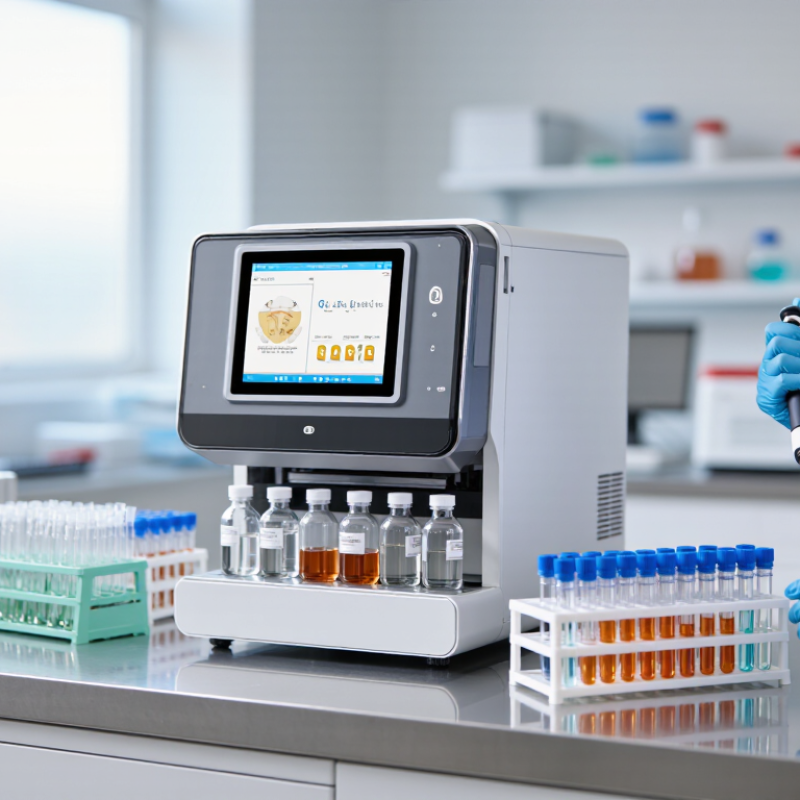
Alzheimer’s biomarker testing looks for biological changes linked to the disease. Depending on the clinical question, testing may examine blood, cerebrospinal fluid, or brain imaging. Some blood tests measure forms of phosphorylated tau or amyloid-related proteins. Cerebrospinal fluid testing can assess related proteins more directly, while PET imaging can show amyloid or tau patterns in the brain.
These results can support a clinician’s assessment, but they do not replace it. A person’s memory history, neurological examination, medications, and daily functioning still matter. A biomarker result may help clarify an uncertain diagnosis or guide further evaluation. It cannot, on its own, explain every change in thinking. The picture is not always neat.
In research, biomarkers help investigators identify participants with particular biological features and track changes over time. This can make study groups more consistent and help researchers evaluate whether an experimental treatment affects its intended target. Testing methods and interpretation can vary, so laboratories need validated procedures and clinicians need to explain what a result can—and cannot—show. A borderline finding may call for more context, not a quick conclusion..testing
Alzheimer’s biomarker testing looks for biological changes linked to the disease, not memory loss alone. Common targets include amyloid-beta, phosphorylated tau, and total tau. Neurofilament light and GFAP may offer additional information about nerve-cell injury or brain changes, but they are not specific to Alzheimer’s. No single result is decisive.
Testing methods include cerebrospinal fluid analysis, blood tests, and amyloid or tau PET imaging. A spinal fluid sample can measure amyloid-beta 42/40 and tau proteins. Blood tests are less invasive and increasingly useful, though performance can vary by assay and patient group. PET scans show where certain proteins build up in the brain, but access and cost may limit use. Clinicians interpret results alongside medical history, cognitive assessments, and imaging. A positive biomarker does not, by itself, explain every symptom.
Tips: Ask what each marker can and cannot tell you. Check whether the test has been validated for its intended use. Share medicines, kidney conditions, and recent illnesses with the clinician, since these may affect interpretation. Context matters. Biomarker testing supports clinical judgment; it does not replace it.
The chart shows whether a commonly used modality is available for each biomarker group: 1 = used, 0 = not typically used to measure that group. It compares modality coverage, not accuracy or diagnostic performance.
Fluid assays measure biomarkers in cerebrospinal fluid (CSF) or blood plasma. Amyloid PET detects brain amyloid plaques; tau PET detects aggregated tau and is distinct from fluid phosphorylated tau (p-tau). Availability and clinical use vary by test and setting.
China’s Alzheimer’s biomarker testing supplier landscape spans assay developers, reagent makers, instrument providers, and clinical laboratories. Their offerings may support blood or cerebrospinal fluid testing, alongside imaging-related services. Common research targets include amyloid-beta, phosphorylated tau, and neurofilament light. These markers provide evidence for clinical assessment; no single result should be treated as a complete diagnosis. Supplier capabilities vary, and public information about validation may be uneven.
Tips: Ask for analytical sensitivity, sample handling requirements, and independent validation data. Check whether the supplier provides clear quality-control procedures. Small details matter.
For procurement teams, compare more than price and delivery time. Review precision across repeated runs, lot-to-lot consistency, training support, and instrument compatibility. Request documentation on the intended use and the populations studied. A test validated in one setting may not perform identically in another. China’s supplier landscape is developing, but it is not perfectly uniform. Some specifications may look impressive while leaving practical questions unanswered. Ask how results are interpreted and when repeat testing may be needed. Be cautious about claims that go beyond the available evidence.
Profiles of China’s Top 10 Alzheimer’s Biomarker Test Suppliers can help laboratories compare products and technical support. A useful profile identifies the biomarkers measured, such as amyloid-beta or phosphorylated tau, and explains the intended sample type. Blood and cerebrospinal fluid assays have different handling needs. Details matter.
Readers should look for information on analytical performance, including sensitivity, precision, and sample stability. Clear validation data is more useful than broad claims. Profiles can also describe assay formats, instrument requirements, quality controls, and available technical documentation. Ask whether results are intended for research, clinical support, or another defined use. These categories are not interchangeable.
A supplier’s responsiveness matters when a lab encounters an unexpected result or needs help adapting a workflow. Look for realistic information about training, lot consistency, and troubleshooting. A polished profile is not proof of clinical reliability. Some public descriptions may omit important validation details; that gap deserves a follow-up question, not an assumption. Compare evidence and intended use before making a purchasing decision.
For China’s Alzheimer biomarker test suppliers, quality starts with the evidence behind each result. The Alzheimer’s Association’s 2024 Alzheimer’s Disease Facts and Figures report estimates that 6.9 million Americans aged 65 and older are living with Alzheimer’s disease. That scale makes dependable testing more than a laboratory concern. Ask suppliers for analytical performance data, including precision across runs, detection limits, interference testing, and performance in the exact sample type you plan to use. A neat brochure is not validation.
Look for independent, multicenter clinical validation and clearly described participant groups. The Alzheimer’s Association’s 2024 revised diagnostic criteria distinguish biomarkers by their diagnostic role, reinforcing the need to match each assay to its intended use. Check whether reported results were compared with accepted reference methods, and whether performance holds across age groups and clinical settings. Small details matter. Request lot-to-lot data, storage instructions, transport-temperature limits, and a sample report before ordering. Service also deserves scrutiny: assess technical response times, staff training, replacement procedures, and help interpreting unexpected results. A supplier may answer quickly but provide vague evidence; that should prompt more questions. No test is flawless, and evaluation often takes more time than expected. Verify claims directly with the published study and supporting documents.
Supplier evaluation framework: the table compares ten due-diligence criteria, not named or ranked companies. Verify all product-specific claims and current regulatory status directly with each supplier.
| # | Evaluation dimension | Evidence to request | Questions for comparison | Buyer assessment |
|---|---|---|---|---|
| 1 | Product and intended use | Current instructions for use (IFU), intended-use statement, specimen types, and assay format. | Is the test intended for research, clinical support, or another defined use? Does the intended use match the planned setting? | Confirm from current product documentation. |
| 2 | Biomarker coverage | Analyte list and assay-specific documentation for markers such as Aβ42, Aβ40, p-tau181, p-tau217, total tau, or neurofilament light (NfL). | Which markers are measured, and are they validated for the stated specimen type and intended use? | Compare only like-for-like analytes and matrices. |
| 3 | Regulatory status | Applicable registration or filing documents, certificate scope, product model, manufacturer, and current status. | Does the documentation cover the exact product and intended use being offered? Is the product research-use-only? | Verify against the relevant authority’s current records. |
| 4 | Analytical performance | Validation reports covering precision, analytical measuring range, limit of detection or quantitation where applicable, interference, and cross-reactivity. | Are methods, acceptance criteria, sample numbers, and results clearly reported for the specific assay? | Review full reports, not summary claims alone. |
| 5 | Clinical validation | Study protocol and results, cohort characteristics, comparator method, statistical analysis, and intended-use population. | Were performance estimates established in a population relevant to your use case and specimen type? | Check study design, limitations, and applicability. |
| 6 | Specimen handling | Collection, processing, storage, transport, freeze-thaw, and rejection criteria for each supported specimen matrix. | Are pre-analytical requirements practical and consistently documented for plasma, serum, or CSF as applicable? | Confirm locally achievable sample workflows. |
| 7 | Quality management | Quality-system certificates, scope and validity, lot-release controls, traceability, and change-control procedures. | Does the quality-system scope cover the relevant manufacturing activities and product family? | A quality certificate does not by itself establish clinical performance or product authorization. |
| 8 | Calibration and quality control | Calibrator and control materials, calibration frequency, QC instructions, target ranges, and inter-lot comparability data. | Can the laboratory monitor run validity and assess lot-to-lot consistency using the supplied materials? | Request current, assay-specific documentation. |
| 9 | Instrument and workflow fit | Instrument compatibility, throughput, hands-on steps, run time, software requirements, and result-reporting format. | What equipment, training, and information-system integration are required at the intended site? | Assess total workflow requirements, not assay claims alone. |
| 10 | Service and supply continuity | Training plan, technical-support channels, response targets, complaint handling, reagent shelf life, lead times, and continuity arrangements. | Are support, replacement, training, and supply commitments documented for the purchasing location? | Confirm service terms and delivery details in writing. |
Note: Biomarker results and cutoffs can be assay- and specimen-specific. Do not assume that results or thresholds from one method are interchangeable with another; review the applicable IFU and clinical evidence.
*The content on this website is for general informational purposes only and should not be taken as medical advice. Please contact your physician or therapist to learn what therapy solution is suitable for your specific needs. Not all products, features, or indications shown are approved in all countries.