Fish Collagen Powder has moved from a niche ingredient to a practical option for supplement and food brands seeking marine-derived collagen. Demand brings opportunity, but it also raises sourcing questions. Buyers need to compare raw-material origins, processing methods, product specifications, and supplier records—not just price.
The FAO’s The State of World Fisheries and Aquaculture 2024 reports that global fisheries and aquaculture production reached 223.2 million tonnes in 2022. This figure describes the wider aquatic sector, not collagen supply alone. It does, however, underline why responsible sourcing and clear traceability matter. Grand View Research valued the global collagen market at approximately USD 5.9 billion in 2023 and projected continued growth. That estimate covers collagen broadly, so it should not be read as a fish-collagen forecast.
For global buyers, a useful supplier review should examine species and origin, hydrolysis details, protein content, solubility, testing methods, and batch consistency. Ask for recent certificates of analysis and clear documentation for each product grade. Also check whether a supplier can explain its quality controls in plain terms. That small test can reveal gaps.
No supplier is perfect. Specifications may differ, and published market data cannot replace direct verification. The following Top 10 Fish Collagen Powder Suppliers overview is designed to help buyers compare capabilities and ask sharper questions before sampling or placing an order.
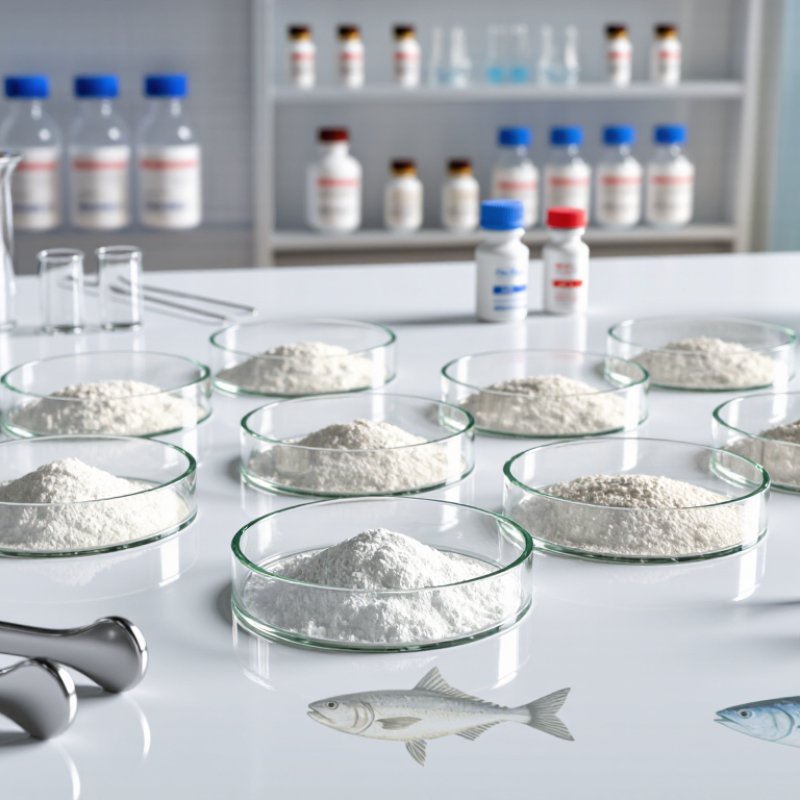
Fish collagen powder is a dried ingredient made from collagen-rich fish materials, commonly skin or scales. Processing breaks the collagen into smaller peptides, which can disperse more easily in liquids. It is used in drink mixes, nutrition products, and some food formulations. It is not a complete protein, so buyers should avoid presenting it as a substitute for balanced dietary protein. The powder’s color, odor, and solubility can vary with species and processing. That variation matters.
Global buyers often assess it for a specific recipe, not just a price list. A beverage maker may test how quickly it dissolves in cool water and whether it changes the drink’s taste. Supplement manufacturers may compare peptide profiles, protein content, moisture, and batch consistency. Buyers should request current test results for microbiological quality and relevant contaminants, plus clear information about fish species and sourcing. Allergen declarations and traceability records are practical essentials. Not glamorous, but useful. Documentation does not guarantee a perfect batch, either. A small pilot run can reveal clumping, an unexpected marine note, or packaging issues before larger orders. Those checks take time, and sometimes the first sample is not representative. Planning for that is part of careful purchasing.
When comparing fish collagen powder suppliers, verify raw-material identity before discussing price. Request the fish species, harvest or farming origin, processing site, and lot-level chain-of-custody records. FAO’s The State of World Fisheries and Aquaculture 2024 reports 223.2 million tonnes of global fisheries and aquaculture production in 2022, including 185.4 million tonnes of aquatic animals. That scale makes origin and by-product traceability practical questions, not paperwork details. Ask how each shipment is linked to its source. Details matter. A certificate without lot references is weak evidence.
Quality claims also need testable definitions. Compare protein content, moisture, ash, microbial results, and heavy-metal testing across recent batches. Ask for the collagen’s molecular-weight distribution and the test method; “low molecular weight” alone is not a specification. Check solubility in cold water, odor, color, and performance in a small production trial. OECD-FAO Agricultural Outlook 2024–2033 projects global food-fish consumption per person to rise modestly, making consistent supply planning relevant for buyers. Review capacity, lead times, change-control procedures, and sample-to-production consistency. A polished dossier can still leave gaps. I would verify key results with an independent laboratory, especially when batches differ.
Supplier profiles reveal different strengths, not a universal winner. Across ten supplier profiles, buyers may encounter integrated processors, fish by-product specialists, species-focused producers, and manufacturers targeting particular peptide sizes. Others emphasize mild odor, quick dissolution, custom powder grades, traceable sourcing, large-volume supply, or flexible small batches. These differences affect formulation and purchasing—not just the price per kilogram.
Feedstock deserves close attention. The FAO’s The State of World Fisheries and Aquaculture 2024 reports that global fisheries and aquaculture production reached 223.2 million tonnes in 2022, including 185.4 million tonnes of aquatic animals. That scale does not guarantee suitable collagen inputs. Ask each supplier which fish materials it uses, how it controls processing, and whether batch documents identify species and origin. Details matter.
Compare current certificates of analysis for protein content, moisture, microbial results, heavy metals, and solubility. Request sample powder and test it in the intended drink or food: a fine powder can still smell strong or form stubborn clumps. Review audit records, change-control practices, and delivery history alongside claims about purity. One caveat: supplier profiles can look more comparable than they are. Testing methods and specifications may differ, so a simple ranking can hide important gaps.
For global buyers, fish collagen powder quality starts long before the powder reaches a warehouse. The FAO’s State of World Fisheries and Aquaculture 2024 reports that aquatic animal production reached 185.4 million tonnes in 2022, with aquaculture supplying 51%. That scale makes precise source records essential. Ask suppliers to identify fish species, harvest area, raw-material type, and processing site for each lot. Check whether collagen comes from skin, scales, or bones, and whether those materials are segregated during handling.
Look beyond a certificate on a sales sheet. Request current food-safety certificates, audit scope, and lot-specific test results for identity, microbiology, and heavy metals. ISO 22000 or recognized HACCP-based systems can indicate structured controls, but certification does not replace product testing. Traceability should connect the incoming fish material to the finished powder, with dates and batch numbers that match across records. Small details matter. A mismatched lot code can slow an investigation.
Supply-chain claims deserve careful questions. Where was the fish processed? Were subcontractors involved? Can the supplier provide a mock-recall record? Chain-of-custody certification may support claims about eligible fisheries, but its scope must match the actual ingredient. Paperwork can still mislead. Buyers should verify documents directly and retain samples from received lots. Perfect traceability is difficult, and some records remain incomplete; suppliers should explain gaps plainly rather than promise certainty.
Quality Standards, Certifications, and Supply Chain Traceability — reference collagen amino-acid markers
Typical collagen contains about 330 glycine, 120 proline, and 90 hydroxyproline residues per 1,000 amino-acid residues. Values are approximate and vary by fish species and processing; they are a general product-quality reference, not supplier-specific data or a supplier ranking.
When comparing fish collagen powder suppliers, request a like-for-like quote. Check whether the price is per kilogram, which grade applies, and whether packaging is included. A low quote may exclude testing, inner liners, or export cartons. Small details matter. Ask for a recent batch specification and certificate of analysis. Compare protein content, moisture, odor, solubility, and lot number. Documents help explain price differences, though they cannot guarantee every shipment will match.
Order terms deserve equal attention. Confirm the minimum order quantity, sample cost, production lead time, payment schedule, and how changes are handled after approval. Ask what happens if a batch misses agreed specifications. Get the answer in writing. For a first purchase, a modest trial order can reveal handling problems that a polished sample may not. It might cost more per kilogram, but can prevent a larger, more expensive mistake.
Shipping can reshape the landed cost. Compare air and sea freight, transit estimates, humidity precautions, and who arranges export documents and cargo insurance. Clarify the delivery point and responsibility for freight charges; terms such as FOB or CIF can shift costs and risk. Request carton dimensions and gross weight before booking, since bulky packaging affects freight. Leave buffer time for port delays. Honestly, estimates are not promises. Check shipment milestones, then inspect seals, labels, and batch records on arrival.
*The content on this website is for general informational purposes only and should not be taken as medical advice. Please contact your physician or therapist to learn what therapy solution is suitable for your specific needs. Not all products, features, or indications shown are approved in all countries.