Choosing the right Muscle Stimulator Pads supplier takes more than comparing prices. Global buyers need dependable products, clear specifications, and communication that holds up across orders. A pad may look ordinary in a catalog, but its adhesive, conductive surface, connector, and backing material all affect handling and compatibility. Small details matter.
That sounds simple. It isn’t.
This guide introduces ten suppliers for buyers to evaluate, not as a guarantee of product performance. Supplier capabilities and availability can change, so confirm current details directly. Request samples and check dimensions, connector type, packaging, and stated shelf life against your device requirements. Ask for relevant quality documentation and test reports, where available. A polished product page is useful, but it cannot replace a sample or a clear technical response.
For international procurement, also compare minimum order quantities, lead times, shipping options, and after-sales support. Ask how the supplier manages batch consistency and handles product complaints. These questions can reveal gaps that a low quote may hide. Still, no checklist removes every risk. A sample may perform well while later batches vary, and stated specifications may not cover your exact use case. Treat the shortlist as a starting point. Verify claims, keep written records, and choose a supplier whose answers are specific, consistent, and easy to check.
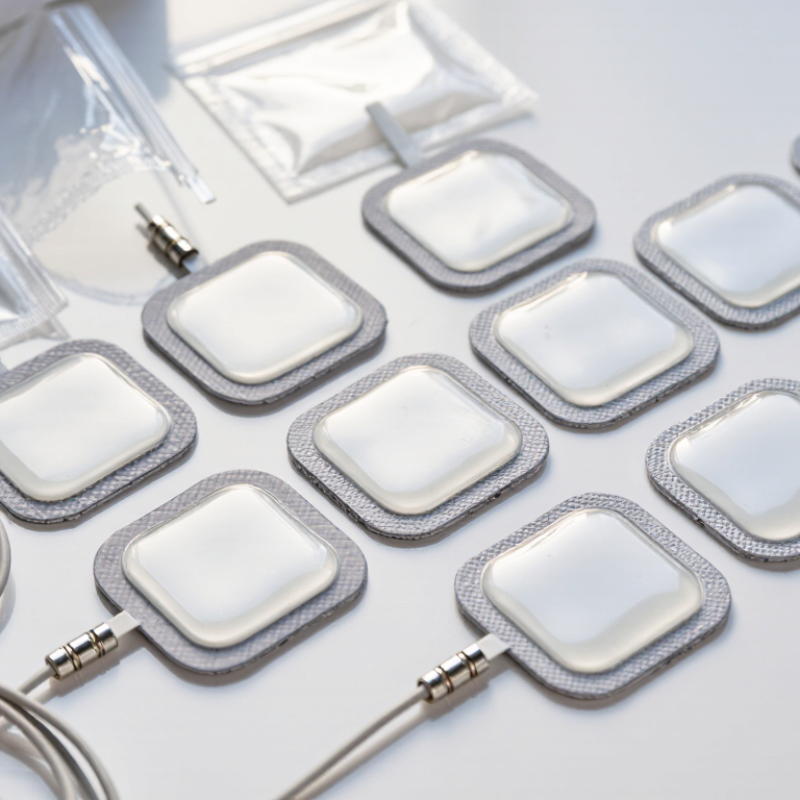
Muscle stimulator pads are the skin-contact parts of an electrical stimulation system. Their conductive surface transfers pulses from a compatible device to the body. Many use a flexible backing and hydrogel layer, which helps maintain contact during a session. Fit matters. Pad shape, connector type, and electrode spacing can differ, so buyers should check device compatibility before ordering.
The global market serves clinics, rehabilitation providers, fitness users, and distributors. Demand is shaped by replacement frequency, comfort expectations, and access to consistent supply. Buyers often compare gel adhesion, backing flexibility, packaging, and stated shelf life. A pad that looks suitable may still perform poorly if it dries out in storage or lifts at the edges. Not always simple. Storage conditions and handling can influence product consistency, especially across long shipping routes.
Reliable evaluation starts with clear specifications and practical sample testing. Check that pads stay in place during ordinary movement and can be removed without excessive discomfort. Skin response varies, so material details and usage guidance matter. Ask suppliers about batch checks, traceability, and packaging protection; these answers reveal more than a broad quality claim. Still, specifications can be messy, and terminology is not always used consistently. That detail gets missed. Buyers should compare like with like and treat unusually vague descriptions as a reason to ask further questions.
An aging population is an important demographic context for global demand for healthcare and rehabilitation products, including muscle stimulation devices and replacement pads.
Figures are rounded estimates and projections. Source: United Nations, World Population Prospects 2022.
When evaluating muscle stimulator pad suppliers, compare the details behind each sample, not just the quoted price. Ask for electrode material, pad dimensions, connector type, and adhesive specifications. The hydrogel should stay evenly spread and hold the pad in place during the intended session. Check whether the supplier can provide technical sheets and lot-level quality records. Useful records include inspection criteria, traceability details, and storage guidance. Small differences matter. A connector that looks right may still fit poorly.
Request samples from more than one production lot, then inspect them under consistent conditions. Check adhesion, edge lifting, residue, and connection stability using the device maker’s instructions. Do not treat one good sample as proof of reliable production. Ask about minimum order quantities, lead times, packaging, and how defects are handled. Clear answers are reassuring. Vague promises are not. A spreadsheet helps, but it can hide important trade-offs, especially when price and delivery speed dominate the comparison. Suppliers should explain which specifications they can hold consistently and where variation may occur. That honest detail is useful, even if it complicates the decision.
Global buyers comparing muscle stimulator pads suppliers should look beyond unit price. The WHO’s Global Atlas of Medical Devices (2017) reported roughly two million types of medical devices worldwide, grouped into over 7,000 categories. That scale makes precise product specifications essential. Ask suppliers to document electrode dimensions, connector type, gel composition, backing material, and packaging conditions. Request samples from more than one production batch. Check whether the adhesive stays evenly attached after repeated handling, and whether the connector fits your intended device. Small details matter. A polished sample alone cannot prove consistent production.
Supplier evaluation should also cover quality records and delivery reliability. The World Bank’s 2023 Logistics Performance Index assessed 139 economies across six dimensions, including tracking and timeliness. For buyers, these are practical checks: request shipment milestones, lot-level traceability, and clear lead-time ranges. Ask how suppliers handle a delayed shipment or a batch that fails incoming inspection. Their answer may reveal more than a sales presentation. I would not treat a certificate as a guarantee; confirm its scope, issuing body, and validity. Compare at least ten suppliers using the same checklist, while noting that different pad designs may require different acceptance criteria.
Anonymized sourcing-market overview for muscle stimulator electrode pads. This is not a verified ranking of individual suppliers; capabilities, certifications, and export experience must be confirmed directly with each manufacturer.
| No. | Sourcing Market | Potential Supplier Fit | Pad Details to Confirm | Buyer Due Diligence |
|---|---|---|---|---|
| 1 | Mainland China | Broad electronics and medical-accessory manufacturing base; suitable for buyers comparing multiple production options. | Connector compatibility, pad dimensions, hydrogel type, reusable-use claims, and packaging options. | Check factory identity, quality records, product testing, export documentation, and sample consistency. |
| 2 | Taiwan | An established electronics and contract-manufacturing market to include in regional sourcing comparisons. | Electrode material, lead-wire or snap interface, adhesive performance, and compatibility with the intended device. | Request technical specifications, production-site details, traceability information, and applicable conformity documents. |
| 3 | South Korea | A technology-oriented manufacturing market worth considering for buyers seeking qualified electronics and healthcare-product vendors. | Material composition, skin-contact labeling, storage conditions, shelf life, and available pad formats. | Confirm the supplier’s specific experience with stimulation electrodes; do not infer pad capability from electronics experience alone. |
| 4 | Japan | A market to assess when documentation, process control, and supplier quality systems are important selection factors. | Adhesion and removal performance, electrode construction, dimensional tolerances, and lot-level quality information. | Ask for current, product-specific test reports and confirm whether the supplier accepts the required order volume. |
| 5 | United States | A potential option for domestic sourcing, shorter local communication loops, or North American distribution requirements. | Whether pads are manufactured domestically or imported, device-interface options, and labeling support. | Verify manufacturing origin, applicable U.S. regulatory obligations, and the exact intended-use claims for the product. |
| 6 | Germany | A European market to investigate for buyers prioritizing regional supply and formal quality documentation. | Product classification, skin-contact materials, instructions, packaging, and compatibility with the target stimulator. | Check the actual manufacturing location and confirm which EU requirements apply to the specific product and intended use. |
| 7 | United Kingdom | A market to consider for UK-based procurement, distribution, or supplier communication needs. | Manufacturing origin, product documentation, connector types, and availability of replacement pads. | Confirm relevant UK market requirements, import responsibilities, and the validity and scope of any certificates provided. |
| 8 | Italy | A European sourcing market to include when evaluating regional production, conversion, or distribution capabilities. | Pad shape and size, material specification, packaging language, and private-label availability if required. | Request evidence for the specific pad model and distinguish the manufacturer from any distributor or reseller. |
| 9 | Netherlands | A possible European procurement or distribution location; a listed market does not by itself indicate local pad manufacturing. | Country of manufacture, stock location, product traceability, and compatibility with the buyer’s device range. | Clarify whether the vendor is a manufacturer, importer, or distributor and verify lead times and returns terms. |
| 10 | Czech Republic | A Central European market to assess for regional sourcing and logistics within Europe. | Production site, pad construction, electrode connector, packaging specifications, and batch consistency controls. | Validate supplier-specific manufacturing capability, applicable conformity documentation, and delivery terms before ordering. |
Before purchasing, request samples and verify device compatibility, skin-contact material information, shelf life, quality documentation, and the regulatory requirements in the destination market.
Selecting a muscle stimulator pad supplier requires more than comparing prices. Buyers should examine production capacity, material controls, and the documents supporting each product. Ask whether the supplier can trace adhesive, conductive fabric, and gel batches to incoming inspection records. Request certificates with clear scope, issuing body, and validity dates. Requirements vary by destination and intended use, so a certificate alone does not prove that every pad meets a buyer’s needs. Ask for evidence. Review sample test reports and confirm they match the proposed product and factory.
Customization should be practical and measurable. Suppliers may adjust pad dimensions, electrode layouts, connector types, adhesive strength, packaging, or private-label artwork. Specify these details in a drawing or written specification before ordering. Then compare production samples for skin contact, cable fit, and adhesion after repeated handling. Small differences matter. Ask how the supplier controls changes between sample approval and mass production. A polished sample can hide inconsistent batches, and buyers sometimes overlook this. That is worth questioning. Request a pilot order, agreed inspection criteria, and a process for reporting defects. Clear records and candid answers often reveal more than a long capability list.
Selecting a supplier starts with the intended use, not a low unit price. The WHO’s 2022 musculoskeletal health report estimates that 1.71 billion people live with musculoskeletal conditions. This figure signals broad health needs, but it does not measure demand for stimulation pads. Buyers should verify that a supplier can consistently provide the pad size, connector, gel type, and packaging their device requires. Ask for material specifications, skin-contact test records, shelf-life data, and traceability by production lot. Small details matter: a pad that lifts at the edge during use can undermine an otherwise sound product.
Use certificates as screening tools, not guarantees. The ISO Survey 2022 recorded 31,870 ISO 13485 certificates worldwide; that number does not confirm a specific factory’s process or product performance. Request current documents, then check whether the named manufacturing site matches the one making your samples. Test several lots for adhesion, conductivity, residue, and performance after storage in warm, humid conditions. Ask suppliers to explain their quality checks and how they handle defective batches. Keep the questions specific. “Can you meet our quality needs?” invites a polished answer. A written sampling plan and clear acceptance limits are harder to misunderstand. I would still request a fresh sample; paperwork can look cleaner than adhesive performance.
*The content on this website is for general informational purposes only and should not be taken as medical advice. Please contact your physician or therapist to learn what therapy solution is suitable for your specific needs. Not all products, features, or indications shown are approved in all countries.