What Are the Top Orthopaedic Device Suppliers in China?

China has become a significant source of orthopaedic devices, from trauma plates and spinal implants to surgical instruments and rehabilitation equipment. This article introduces leading Chinese suppliers and explains how buyers can assess them beyond attractive pricing. A reliable supplier should demonstrate consistent manufacturing, traceable materials, qualified engineers, and responsive clinical support. Quality is visible in details, such as clean packaging, accurate implant markings, and controlled inspection records.

The review considers companies with established production capabilities, relevant certifications, and experience serving hospitals or international distributors. ISO 13485 certification can indicate a structured quality system, but it should not replace independent verification. Buyers should also examine NMPA registration, applicable export approvals, product testing, sterilisation controls, and post-market reporting. Regulations vary by destination. Therefore, every claim needs checking against current official sources.

Names alone are not enough. A large catalogue may hide uneven documentation or limited surgeon training. Some suppliers communicate well during sales but respond slowly after delivery. That matters. The phrase “orthopaedics derives system” may appear in search research, but it is not a recognised quality standard or supplier category. Readers should treat unfamiliar terminology carefully and focus on evidence. Factory audits, sample reviews, reference hospitals, and clear warranty terms can reveal practical strengths. This guide aims to support a balanced shortlist, while acknowledging that supplier rankings can change with certification updates, product performance, and customer experience.
What Are the Top Orthopaedic Device Suppliers in China?

What Are Orthopaedic Device Suppliers in China?

Orthopaedic device suppliers in China include manufacturers, contract producers, distributors, and export service companies. They may supply trauma plates, spinal implants, joint replacement components, external fixation systems, or surgical instruments. Some operate complete factories. Others coordinate production through qualified partners. This difference matters.

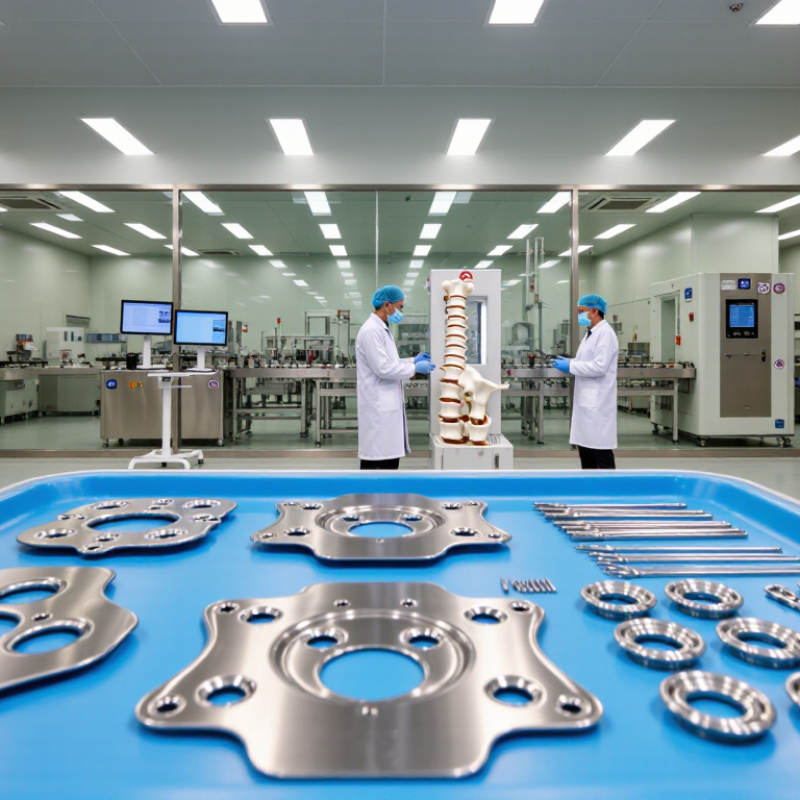
A reliable supplier should explain its quality system clearly. Ask about material certificates, production controls, sterilization records, and batch traceability. Request current regulatory documents for your target market. Technical files should match the actual product, not a generic catalogue. Factory audits can reveal practical details, such as cleanroom discipline, instrument calibration, and packaging storage. A polished website is not proof of clinical reliability.

Experienced buyers also review design support and communication. Can the engineering team adapt hole spacing, sizes, or instrument grips? Are drawings controlled through documented revisions? Clear answers suggest stronger technical management. Clinical evidence may be limited for some products, so evaluation should include testing data and surgeon feedback. Do not rely on price alone. A low quotation can hide incomplete validation, weak after-sales support, or unstable supply. That concern is easy to overlook.

Suppliers should also provide training materials, complaint handling, and replacement procedures. Delivery promises need verification through production capacity and shipping records. Local language support may help, but it cannot replace technical accuracy. In practice, even a capable supplier may have gaps. Those gaps should be recorded, questioned, and reviewed before purchase.

How Is China’s Orthopaedic Device Market Structured?

China’s orthopaedic device market is structured around public hospitals, centralized procurement, and specialized distributors. Public hospitals remain the main purchasing channel, especially for joint, spine, trauma, and sports medicine products. Private hospitals and outpatient centers are growing, but their influence is still smaller outside major cities.

The supplier base has three clear layers. Domestic manufacturers compete strongly in trauma fixation, basic joint implants, and spinal systems. International suppliers remain active in complex implants, surgical navigation, and premium materials. Local distributors connect suppliers with hospitals, training centers, and operating rooms.

This structure is changing quickly. The National Healthcare Security Administration reported average price reductions of about 82% in the 2021 artificial joint procurement program. Its 2023 spinal implant procurement also produced average reductions of roughly 84%.

Price is no longer the only selection factor. Hospitals increasingly examine clinical evidence, surgeon training, supply continuity, and after-sales support. Frost & Sullivan and other market reports have forecast continued growth in China’s orthopaedic implant demand, supported by aging populations and rising procedure volumes. However, market estimates differ because some reports include consumables, instruments, or rehabilitation products. That limitation deserves attention.

In practice, the strongest suppliers often combine manufacturing depth with hospital access and regulatory experience. Smaller companies may serve regional hospitals more effectively. Yet, they can face weaker evidence systems and unstable distribution coverage. The market is competitive, but not perfectly transparent. Data quality remains uneven across product categories.

Which Companies Are China’s Leading Orthopaedic Device Suppliers?

China’s leading orthopaedic device suppliers are established domestic manufacturers with broad implant portfolios and reliable hospital coverage.

They commonly produce trauma fixation systems, spinal implants, joint replacements, and sports medicine products. Frost & Sullivan’s China orthopaedic implant market analysis places the sector among the country’s fastest-growing medical-device segments, supported by aging populations and rising surgical demand. Public procurement data also shows intense price competition.

The strongest suppliers usually combine domestic production with certified quality systems, clinical evidence, and responsive technical support. Their products must meet National Medical Products Administration registration requirements and survive centralized procurement evaluations. Research by the China Medical Device Industry Association indicates that domestic manufacturers continue gaining share in high-value implants, although advanced joint and spine technologies still require deeper clinical validation.

That gap matters.

Hospital purchasing teams should examine revision rates, surgeon training, supply continuity, and post-operative monitoring. A polished catalogue is not enough. Suppliers with local manufacturing can often shorten delivery times and manage costs more effectively. However, lower prices may pressure research budgets and service quality.

That trade-off deserves scrutiny.

Independent evidence remains uneven, especially for newer designs, so buyers should compare multi-year clinical outcomes rather than rely only on tender prices.

What Products and Technologies Do These Suppliers Provide?

China’s orthopaedic device suppliers provide a broad range of products for hospitals and surgical centers. Their portfolios often include trauma plates, screws, intramedullary nails, joint implants, spinal systems, and external fixation devices. Many suppliers also develop sports medicine tools, such as anchors, interference screws, and instruments for ligament repair. In practical use, surgeons may compare screw strength, implant fit, instrument handling, and sterilization workflow before selecting a system.

Manufacturing technology has become more specialized. Suppliers commonly use titanium alloys, cobalt-chromium alloys, stainless steel, and advanced polymer materials. Some offer porous surfaces that support bone ingrowth. Additive manufacturing can create patient-specific components and complex implant structures. Digital planning platforms, surgical navigation, and robotic assistance are also entering selected clinical settings. These technologies may improve positioning, but they still require trained teams and careful validation.

Reliable suppliers usually provide design records, material testing, traceability, and quality management documentation. Regulatory registration and clinical evidence remain important when hospitals assess new products. Factory visits can reveal details that brochures hide, including machining consistency, packaging controls, and inspection routines. Not every polished prototype deserves adoption. Some systems look innovative but lack long-term clinical evidence. I would ask about revision rates, surgeon training, instrument availability, and after-sales support.

The best choice is rarely the most complex device. It is the system that performs consistently in real operating rooms.

How Should Buyers Evaluate Chinese Orthopaedic Device Suppliers?

What Are the Top Orthopaedic Device Suppliers in China?

Buyers should evaluate suppliers through evidence, not impressive presentations. Check whether the manufacturer operates under a documented quality system, such as ISO 13485. Review production records, inspection procedures, and staff training logs. Ask for certificates and confirm their validity with the issuing organization.

Product quality requires more than a clean factory. Request material specifications, dimensional reports, sterilization records, and packaging validation data. For implants, examine fatigue testing, biocompatibility evidence, and traceability from raw material to finished product. Clinical documentation should be relevant to the product, not simply copied from a general catalogue. Small details matter.

Factory visits can reveal useful habits. Watch how workers handle components, label batches, and control nonconforming products. A polished showroom may hide weak follow-up systems. That possibility deserves attention. Buyers should also assess delivery history, complaint handling, and post-market monitoring. Ask how quickly the supplier investigates a failed device or missing record. Then test communication with a small, clearly documented order.

Samples should match future production standards. Do not approve a sample without checking drawings, tolerances, packaging, and inspection methods. Independent testing can reduce uncertainty, especially for high-risk devices. Contract terms should define change notifications, audit access, confidentiality, and corrective actions. Price still matters, but unusually low pricing may reflect thinner inspection or unstable materials. I would not ignore that warning.

What Are the Top Orthopaedic Device Suppliers in China? — How Should Buyers Evaluate Chinese Orthopaedic Device Suppliers?
Evaluation Dimension Relevant Data or Requirement Recommended Weight Evidence Buyers Should Request Buyer Interpretation
Product Scope Trauma fixation, joint replacement, spinal systems, sports-medicine products, surgical instruments, or related orthopedic consumables. 10% Current product catalogue, technical files, device classification, and intended-use statements. A supplier should demonstrate proven capability in the exact product family being purchased, not only general medical-device experience.
NMPA Regulatory Status In China, Class I devices generally use filing, while Class II and Class III devices require registration. Many implantable orthopedic devices are subject to Class III controls. 15% NMPA registration certificate or filing record, approved product scope, certificate validity, and certificate-holder information. The regulatory certificate must cover the specific model, material, configuration, and intended use offered to the buyer.
Quality Management System ISO 13485 is the internationally recognized quality-management standard specifically used for medical devices. 15% Valid ISO 13485 certificate, certification scope, issuing body, audit history, and corrective-action records. A valid certificate is important, but buyers should verify that the audited site and product scope match the actual manufacturing arrangement.
International Market Access Export requirements depend on the destination. EU sales may require compliance with Regulation (EU) 2017/745, while U.S. sales may require an applicable FDA pathway such as 510(k), De Novo, or PMA. 10% Destination-market registrations, declarations, certificates, prior export records, and post-market surveillance procedures. A supplier with relevant market authorization can reduce registration delays and documentation risk.
Materials and Biocompatibility Common orthopedic implant materials include titanium alloys, cobalt-chromium alloys, stainless steels, ultra-high-molecular-weight polyethylene, and related biomaterials, depending on the device. 10% Material certificates, supplier traceability, biocompatibility evaluation, sterilization validation, and applicable test reports. Material grade, surface treatment, and biological safety evidence should be consistent across technical files, labels, and delivered goods.
Manufacturing and Process Control Critical processes may include CNC machining, forging, additive manufacturing, coating, cleaning, packaging, and sterilization. 15% Factory audit results, process-validation reports, equipment list, environmental controls, inspection plans, and batch records. Strong process validation and traceability are more meaningful than production capacity claims alone.
Testing and Performance Verification Orthopedic implants may require mechanical, dimensional, fatigue, wear, corrosion, packaging, and sterilization-related testing according to the applicable device and standards. 10% Third-party laboratory reports, test methods, sample identification, acceptance criteria, and report dates. Reports should be product-specific and traceable to the current design revision rather than generic material certificates.
Design and Customization Capability Capability may include engineering support, patient-specific design, instrument compatibility, packaging customization, and controlled design changes. 8% Design-control procedure, engineering-change records, prototype samples, CAD drawings, and verification or validation plans. Customization should be managed through documented design controls and should not bypass regulatory review.
Supply Reliability Key indicators include production lead time, on-time delivery, production-site continuity, dual sourcing, inventory policy, and capacity for demand changes. 7% Capacity plan, lead-time records, delivery performance, business-continuity plan, and critical-component sourcing map. A lower quoted price should not outweigh unstable delivery or dependence on a single critical supplier.
Traceability and Post-Market Support Medical-device traceability should cover raw materials, production batches, inspection results, shipment records, complaints, recalls, and corrective actions. 5% Unique device identification approach where applicable, sample batch records, complaint procedure, recall procedure, and response-time commitments. Clear traceability supports faster investigations and reduces the impact of quality incidents.
Commercial Transparency Total cost includes unit price, tooling, validation, packaging, freight, duties, registration, training, warranty, and after-sales support. 5% Itemized quotation, Incoterms, payment terms, minimum order quantity, warranty terms, change-notification policy, and service-level agreement. The best supplier is not necessarily the lowest-cost supplier; buyers should compare compliant total landed cost and long-term risk.
Total Evaluation Score 100% Use weighted scores only after document review, sample evaluation, and—where appropriate—an on-site quality audit.