China’s electrical stimulation device manufacturers serve a growing need for rehabilitation, pain management, and physical therapy equipment. The World Health Organization’s 2023 rehabilitation fact sheet estimates that 2.4 billion people worldwide could benefit from rehabilitation. That figure highlights the scale of need, but it does not predict demand for any single device or market.
Industry reports, including Grand View Research’s analysis of electrotherapy products, track demand alongside advances in portable designs and digital controls. These trends make manufacturer comparisons more useful than headline growth forecasts alone. Buyers should examine documented quality systems, clinical-use guidance, product specifications, and after-sales support. Details matter: electrode compatibility, adjustable intensity, and clear instructions can shape daily use.
Look closely. A supplier’s catalogue may show breadth, not proven performance. This guide introduces China-based manufacturers and the factors that help distinguish them, while treating marketing claims with care. Product suitability depends on intended use and qualified clinical judgment; one device is not right for everyone. Publicly available company information can also be incomplete, so buyers should verify certifications and test documentation directly. Industry data offer context, not a substitute for due diligence.
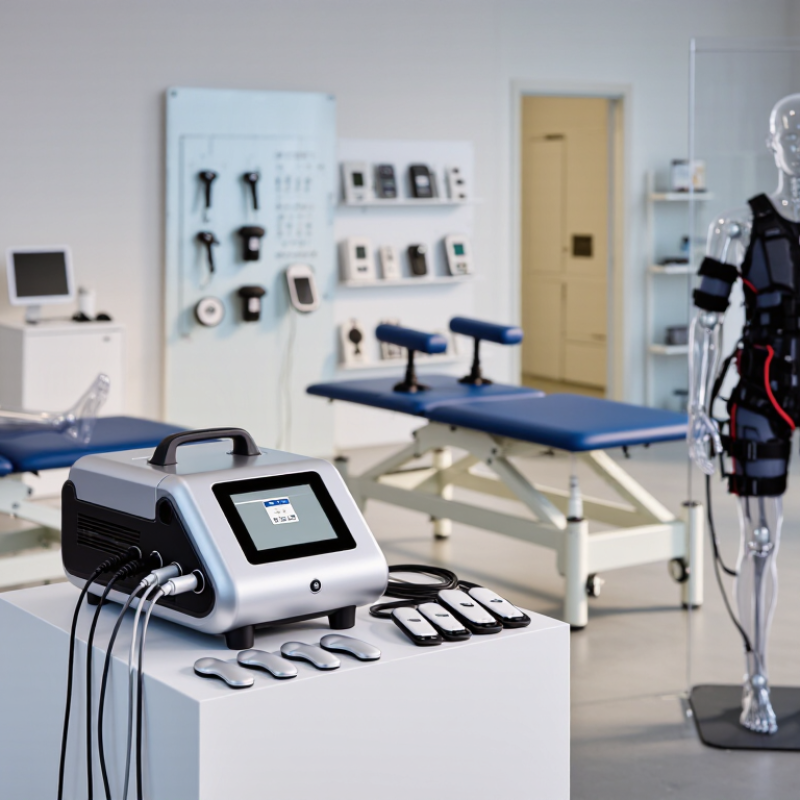
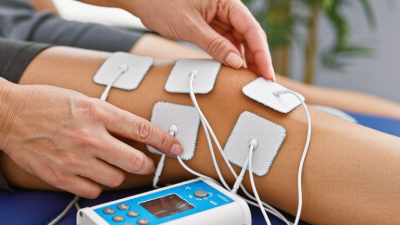
Electrical stimulation devices send measured electrical pulses through skin electrodes or implanted leads. Surface electrodes feel cool and slightly sticky; once activated, they deliver pulses at set frequencies and intensities. Transcutaneous electrical nerve stimulation (TENS) mainly targets sensory nerves and may alter pain signaling. Neuromuscular electrical stimulation (NMES) activates motor nerves, producing visible muscle contractions. Pulse width, frequency, electrode position, and intensity all affect the sensation and response. More power is not automatically better.
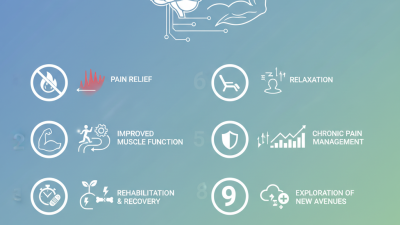
The clinical context matters. The WHO’s 2023 low-back-pain fact sheet estimates that 619 million people experienced low back pain in 2020, with cases projected to reach 843 million by 2050. That burden helps explain interest in non-drug approaches, but it does not prove that stimulation works for every person. A Cochrane evidence review of TENS for chronic pain found the available evidence too uncertain for firm conclusions. The mechanism is clear; outcomes are less predictable. In practice, users should follow device instructions and seek professional guidance when pain persists or health conditions complicate treatment. Electrode placement can be fiddly, too.
A representative biphasic stimulation pulse
Electrical stimulation devices deliver controlled electrical pulses through electrodes. This illustrative, normalized waveform shows two opposite-polarity phases, a brief interphase gap, and the return to zero between pulses. Actual pulse shapes and settings vary by device and application.
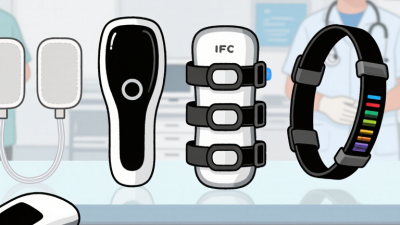
Electrical stimulation devices are grouped by the signals they deliver and the tasks they support. TENS units provide sensory-level stimulation and are commonly used in pain-management settings. EMS and NMES devices activate muscles, supporting muscle re-education or supervised rehabilitation. Microcurrent devices use very low current, though their intended applications vary by design. These categories can overlap. Names alone do not explain how a device works.
For manufacturers, application should guide design choices. Clinicians may look for adjustable intensity, clear controls, secure electrode connections, and instructions that explain placement. A therapy device used in a clinic may need different controls from one intended for home use. Check how stimulation settings are tested and documented, and whether the instructions describe appropriate users and limitations. The distinction can feel messy; product categories do not always map neatly to real treatment needs.
Tips: Match the device type to the intended use, not just its feature list. Review electrode placement guidance and cleaning instructions. Start with the lowest suitable setting, and seek qualified advice when treatment choices are unclear. A good fit matters.
| Device Category | Stimulation Approach | Common Applications | Typical Device Setup | Important Considerations |
|---|---|---|---|---|
| Transcutaneous Electrical Nerve Stimulation (TENS) | Low-voltage pulses delivered through surface electrodes to stimulate peripheral nerves. | Temporary symptomatic relief of certain types of acute or chronic pain. | Portable, non-invasive unit with adjustable pulse settings and adhesive skin electrodes. | Responses vary by person and pain condition. It is generally used as a pain-management aid, not as a cure or substitute for diagnosis. |
| Neuromuscular Electrical Stimulation (NMES) | Electrical pulses activate motor nerves and produce targeted muscle contractions. | Muscle re-education and strengthening in rehabilitation, including situations involving weakness or disuse. | External controller connected to skin electrodes placed over selected muscles. | Settings and placement should be selected for the person’s condition and treatment goal; clinical guidance may be appropriate. |
| Functional Electrical Stimulation (FES) | Timed stimulation activates muscles to assist a functional movement. | Assistance with tasks such as lifting the foot during walking in some people with neurological conditions, including selected cases after stroke or spinal cord injury. | Surface electrodes or wearable systems, sometimes synchronized with movement sensors or a control switch. | Suitability depends on the movement impairment, nerve and muscle response, and ability to position the device correctly. |
| Pelvic Floor Electrical Stimulation | Electrical pulses stimulate pelvic floor nerves or muscles using an appropriate electrode. | May be used under professional guidance for selected cases of urinary incontinence or pelvic floor muscle rehabilitation. | External or intravaginal/intra-anal electrode connected to a control unit, depending on the prescribed system. | Assessment is important because treatment choice depends on the type of symptoms and the person’s health circumstances. |
| Spinal Cord Stimulation (SCS) | Implanted leads deliver electrical stimulation near the spinal cord to alter pain signaling. | Management of selected cases of persistent neuropathic pain when other treatments have not provided adequate relief. | Implanted lead system connected to an implanted pulse generator; a trial may be performed before permanent implantation. | Requires specialist assessment, implantation, follow-up, and discussion of potential risks and expected benefits. |
| Deep Brain Stimulation (DBS) | Implanted electrodes deliver controlled stimulation to selected brain targets. | Management of symptoms in carefully selected people with conditions such as Parkinson’s disease, essential tremor, or dystonia. | Neurosurgically implanted electrodes connected to a programmable pulse generator. | It is not suitable for everyone and typically requires evaluation and ongoing programming by a specialist team. |
| Electrical Bone Growth Stimulation | Electrical or electromagnetic fields are applied to support bone-healing processes. | May be considered by clinicians for certain cases of delayed bone healing or nonunion. | Depending on the system, the device may be worn externally or applied near the treatment site. | Use depends on the fracture, healing history, and clinical assessment; it does not replace appropriate fracture care. |
Note: Applications listed are general examples, not individual medical recommendations. Device selection, contraindications, and treatment settings should be reviewed with a qualified healthcare professional.
China’s electrical stimulation manufacturing landscape combines electronics assembly, enclosure production, electrode sourcing, and product engineering. Manufacturers may handle these stages in one facility or coordinate several specialized suppliers. That structure can support flexible production, but it also makes supplier oversight important.
A device’s performance depends on more than its control panel. Engineers must consider current output, waveform stability, insulation, connector durability, and electrode contact. During evaluation, buyers can request test records and inspect how samples behave during repeated use. Small details matter. A loose cable or unclear control marking can affect daily handling.
Capabilities vary between factories. Some focus on custom development, while others specialize in established product designs and larger production runs. Ask how design changes are documented and how incoming components are checked. The picture is not perfectly even: polished samples do not always reveal production consistency. Clear communication helps, though it cannot replace independent verification. A practical assessment should compare technical documentation, sample quality, and after-sales support rather than relying on price alone.
Evaluating a Chinese electrical stimulation device manufacturer requires more than checking its catalogue. The WHO Global Atlas of Medical Devices (2017) describes roughly 1.5 million different medical devices worldwide. That scale makes precise product identification essential. Ask for the device’s intended use, risk classification, and registration or filing details. Verify applicable records through the relevant regulator’s public database. A generic certificate is not enough.
Check whether the quality system follows ISO 13485, and review model-specific test reports against applicable standards, including IEC 60601-1 for electrical safety and IEC 60601-1-2 for electromagnetic compatibility. Requirements vary by product and destination market. Inspect traceability records for key components, such as electrodes and batteries. During sample testing, compare output settings with measured pulse parameters under realistic loads. Paper is not proof. A tidy audit can still miss inconsistent production batches, so request records from more than one production run. Also ask how complaints, design changes, and corrective actions are documented. The answer may be imperfect; the important part is whether the manufacturer can show evidence and explain gaps clearly.
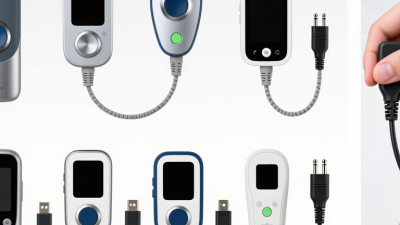
Manufacturers differ in engineering focus, production capacity, and after-sales support. Some excel at compact units with clear controls and adjustable intensity. Others offer multiple output channels, customizable programs, or accessories for varied professional settings. Look closely at electrode connections, display readability, and how smoothly settings change. Small details matter.
A strong supplier should provide clear technical documentation, consistent product specifications, and practical guidance for safe operation. Ask how devices are tested, how production batches are tracked, and what support is available when components need replacement. Request sample units when possible. A polished brochure is not proof of dependable performance, and supplier responses can be uneven. That deserves scrutiny.
Tips: Compare output ranges, channels, controls, and documentation side by side. Check electrode compatibility and replacement availability. Confirm that instructions explain setup, precautions, and maintenance. Don’t choose on price alone. A lower-cost unit may fit basic needs, but unclear specifications can make evaluation difficult.
*The content on this website is for general informational purposes only and should not be taken as medical advice. Please contact your physician or therapist to learn what therapy solution is suitable for your specific needs. Not all products, features, or indications shown are approved in all countries.